
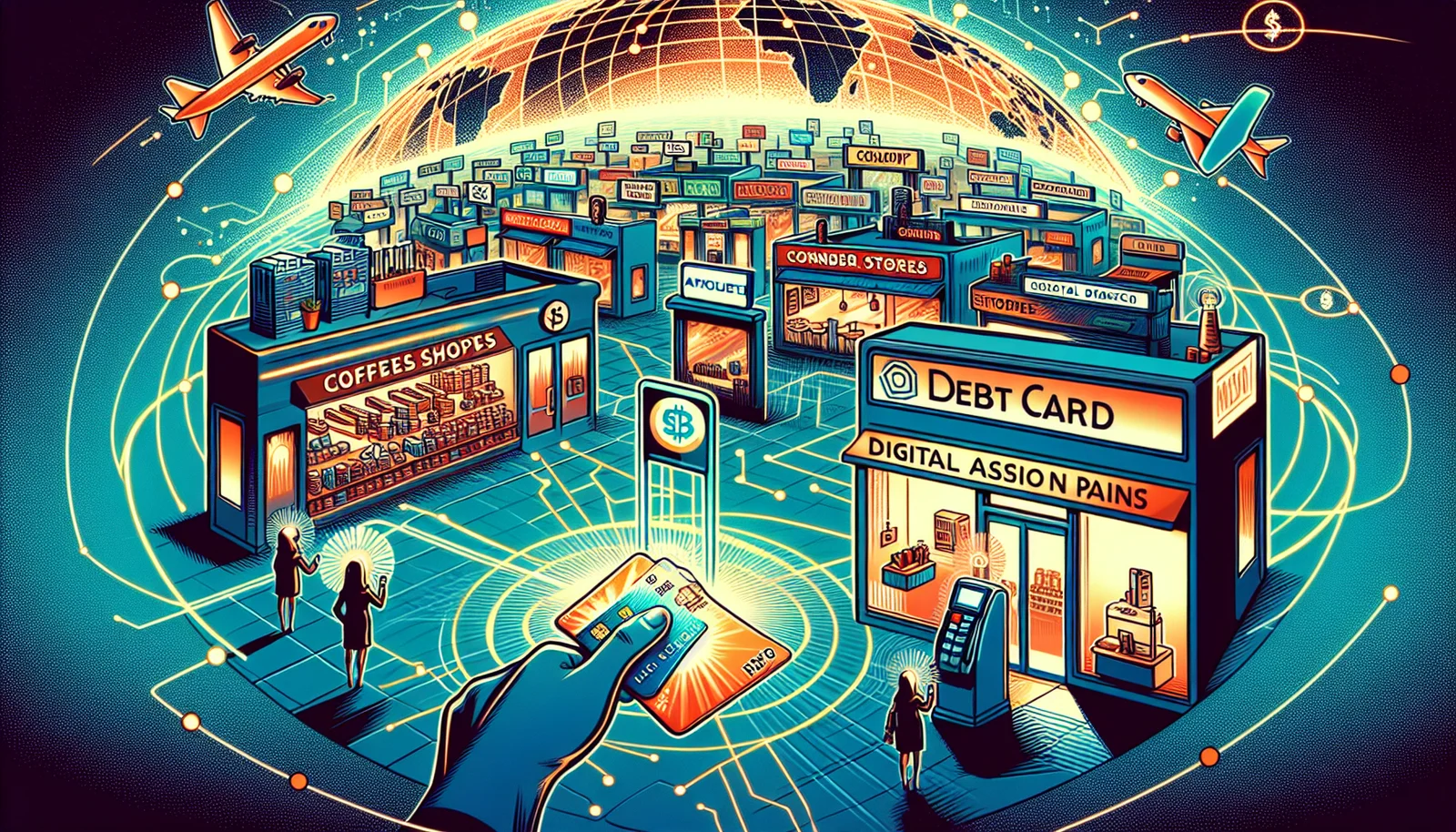
Lightspark and Visa Bring Stablecoin and Bitcoin Debit Cards to 100+ Countries
Lightspark partnered with Visa on April 29, 2026 to enable stablecoin- and Bitcoin-backed Visa debit cards across 100+ countries — a meaningful step toward letting consumers spend digital assets at any of Visa's 175 million+ merchant locations worldwide.

A Real-World Bridge Between Digital Assets and Everyday Spending
Lightspark and Visa announced a global partnership on April 29, 2026 that will enable stablecoin- and Bitcoin-backed Visa debit cards across more than 100 countries. The deal — built on Lightspark's Grid platform and Visa's network of 175 million-plus merchant locations — is one of the cleanest, most operationally significant bridges between the digital asset ecosystem and everyday consumer spending that the crypto industry has shipped to date.
For crypto market watchers, fintech developers, and the broader payments ecosystem, this is the kind of partnership announcement that moves the digital asset utility conversation forward concretely. Lightspark Grid functions as the routing and settlement layer that connects stablecoin balances, Bitcoin holdings, and fiat accounts on the back end, while Visa provides the merchant acceptance surface on the front end. The combination is what makes the offering practical at global scale: cardholders spend the way they always have, merchants accept the way they always have, and the digital asset settlement happens cleanly in the background.
How the Stablecoin and Bitcoin Card Stack Works
Through Lightspark's Grid platform, financial institutions, businesses, and fintech developers can offer Visa debit cards linked directly to a cardholder's stablecoin balances, fiat accounts, or Bitcoin holdings. When the cardholder taps the card at a Visa-accepting merchant, the transaction routes through Visa's network at the merchant interface and settles against the cardholder's selected funding source on the back end through Lightspark Grid. From the merchant's perspective, it is a standard Visa transaction. From the cardholder's perspective, they are spending USDC, BTC, or fiat without thinking about the funding rail.
The supported asset set is broad enough to be genuinely useful. Cards can be funded through stablecoins including USDC and others across major chains including Solana, Base, and Spark. Bitcoin funding works via Spark, the Lightning Network, or standard L1 funding. That breadth of funding-rail support is the operational property that makes the cards practical across the wide variety of digital asset balances that real users actually hold.
Geographic Rollout
The partnership goes live first in the United States and Europe, with planned expansion to Asia Pacific, Africa, and the Middle East following the initial rollout. Lightspark will work with Visa to become a Principal Member, starting in Europe, deepening the integration between Lightspark's payment infrastructure and Visa's global network. As a Principal Member, Lightspark handles compliance, settlement, and program management on behalf of the financial institutions and fintechs that issue the cards through its infrastructure — which is the operational pattern that lets the cards scale efficiently across 100-plus markets without each issuing partner having to negotiate Visa membership independently.
Why This Matters for the Digital Asset Story
The Lightspark-Visa partnership lands during a productive stretch for crypto-payments integration. Shinhan Card brought stablecoin payments to its 28 million cardholders on Solana earlier this spring. The 11 U.S.-listed spot Bitcoin ETFs have logged two consecutive months of net inflows. Tokenized real-world assets crossed $19.3 billion in Q1 2026. Each of those data points adds to the picture of a digital asset ecosystem that is maturing into productive financial infrastructure rather than remaining purely a speculative market segment, and the Lightspark-Visa cards extend that maturation into the everyday consumer payments layer.
The 175 million-plus Visa merchant footprint is the particularly important piece. For digital asset utility to feel real to a typical consumer, the assets need to be spendable at the corner store, the coffee shop, and the airline ticket counter without forcing the user to convert through an exchange first. Visa's acceptance footprint is essentially synonymous with "everywhere" for most consumers, and the Lightspark Grid back end lets that footprint accept stablecoin and Bitcoin balances natively.
The Practical Take
For crypto users, the Lightspark-Visa cards are a meaningful step toward making stablecoin and Bitcoin holdings practically spendable at global scale. For fintech developers, the partnership opens a new class of card programs that can be issued on top of Lightspark Grid without each issuer having to build its own crypto-payments infrastructure. For the broader payments ecosystem, this is one more credible data point in the case that digital assets are becoming legitimate, productive payment infrastructure alongside traditional fiat rails.
For Lightspark, the Visa Principal Membership pathway is a meaningful platform upgrade that turns the company from a Lightning-and-stablecoin payments specialist into a card-program orchestrator capable of serving large-scale issuing partners. For Visa, the partnership extends its growing crypto presence with a credible technical partner and a clear path to expanding stablecoin and Bitcoin card programs across its global network.
The broader takeaway: digital assets and the legacy payments network are becoming increasingly compatible operating layers, and the partnerships that knit those layers together are the ones that turn digital asset balances into practical everyday spending.
Sources: Lightspark Press Release Visa Partnership Announcement (April 29, 2026), TradeInformer Lightspark Visa Bitcoin Debit Cards Coverage, Yahoo Finance Visa Lightspark Stablecoin Bitcoin Debit Cards Coverage, Lightspark Grid Documentation, Visa Crypto Solutions Page
More Crypto Stories

Ethereum Glamsterdam on Sepolia: What 200M Gas Means Next
Ethereum's Glamsterdam upgrade is live on Sepolia with in-protocol PBS, parallel validation and a near-200M gas limit, over 3x mainnet's current 60M.
Samsung Wallet USDC: How 82M Galaxy Phones Will Send Money
Samsung Wallet will let US users send USDC across borders over Solana from late October 2026, reaching about 82 million Galaxy devices at launch.

How Stablecoins Work: Reserves, Redemption and Sending Money
How do stablecoins work? Our guide explains the 4 types, how USDC reserves and 1:1 redemption work, and how to send a stablecoin transfer abroad safely.