
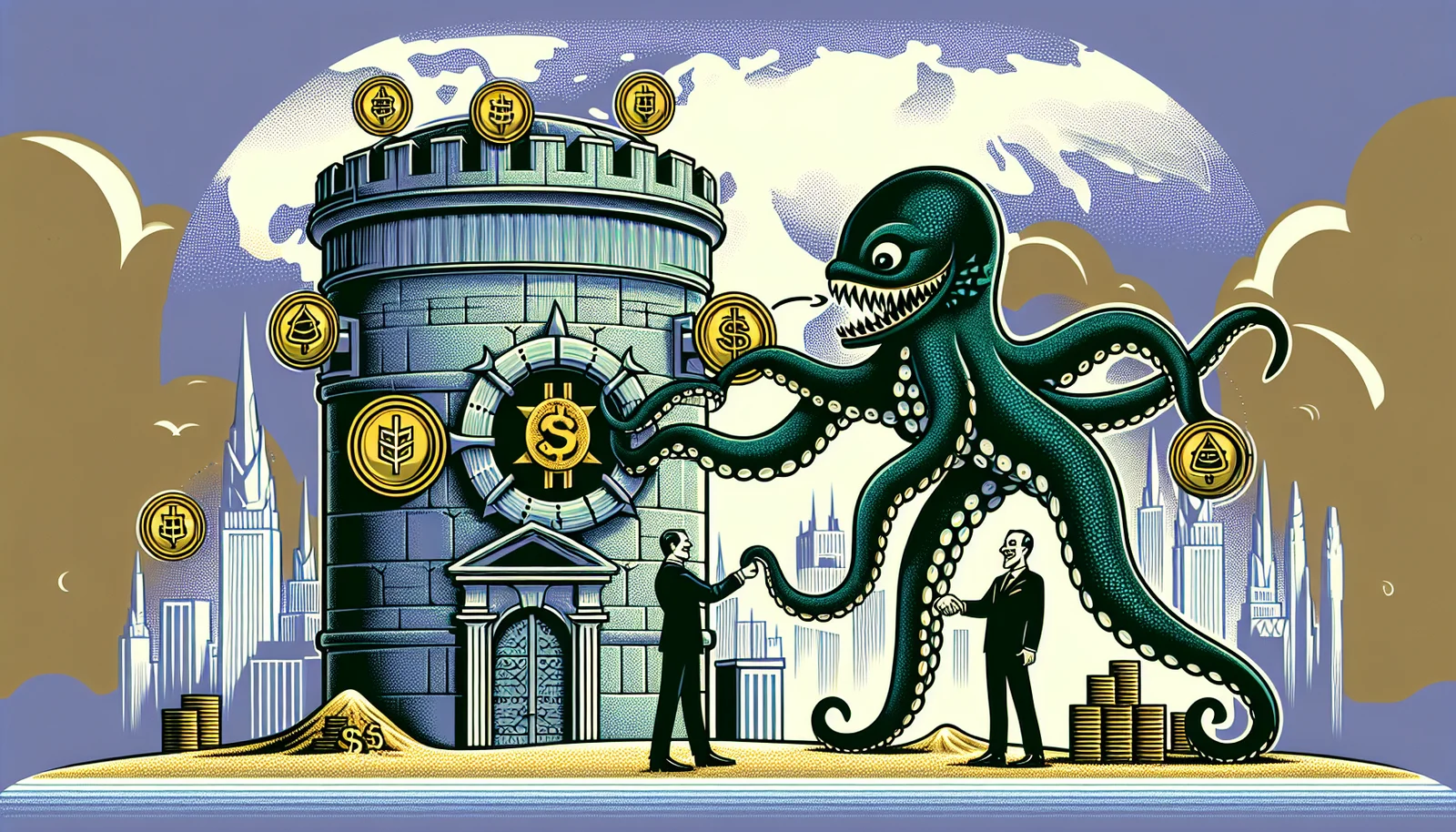
Kraken Owner Payward Acquires Bitnomial for $550M to Build Full US Derivatives Stack
Kraken parent Payward acquires Bitnomial for $550M, securing all three CFTC licenses needed to offer futures, options, and spot margin for US retail traders under one roof.

Payward's Bitnomial Deal Is a Masterclass in Regulatory Positioning
Announced on April 17, 2026, Payward — the parent company of crypto exchange Kraken — agreed to acquire Bitnomial for up to $550 million in cash and stock. The headline figure is significant. But the strategic logic is what makes this deal genuinely interesting.
Bitnomial is not a large exchange by volume. It is a regulatory asset. The company holds all three licenses required to operate a complete US derivatives business under Commodity Futures Trading Commission oversight: a designated contract market (DCM), a derivatives clearing organization (DCO), and a futures commission merchant (FCM) license. No other crypto-native company has assembled all three.
What Those Three Licenses Actually Mean
The US derivatives regulatory stack is notoriously difficult to build. Each license requires separate approval from the CFTC, separate capital requirements, and separate operational infrastructure. Bitnomial spent over a decade accumulating all three — a process that would take any acquirer years to replicate independently.
For Payward, acquiring Bitnomial shortcuts that entire regulatory buildout in a single transaction. The practical outcome for US Kraken customers: access to spot margin trading, perpetual futures, and options — products that have been available to international Kraken users but have faced regulatory barriers in the US market.
The Three Pillars of US Crypto Derivatives
Designated Contract Market (DCM): The exchange license for listing and trading standardized futures and options contracts under CFTC rules. This is the legal foundation for offering futures trading.
Derivatives Clearing Organization (DCO): The clearinghouse license — required to guarantee and settle trades, manage counterparty risk, and hold customer margin in a regulated structure. This is the piece that enables large institutional participation.
Futures Commission Merchant (FCM): The brokerage license that allows the firm to accept customer funds, execute orders on their behalf, and interact directly with retail and institutional participants.
Together, these three licenses form a complete operational stack. Kraken's international derivatives business already generates substantial volume; with Bitnomial's infrastructure, the US market becomes fully accessible.
Deal Structure and Timeline
The transaction covers 100% of Bitnomial's equity at up to $550 million (cash and stock mix). The deal is expected to close in the first half of 2026, pending CFTC review and customary regulatory filings.
Initial offerings for US clients are expected to include spot margin, perpetual futures, and options — a substantial expansion of what regulated US crypto exchanges currently offer retail participants.
Kraken is currently valued at approximately $20 billion, which makes the $550 million acquisition price look like a calculated infrastructure investment rather than a speculative financial bet.
The Bigger Picture for US Crypto Regulation
The Bitnomial acquisition reflects a broader trend: crypto exchanges that want to compete seriously in the US derivatives market are betting on regulatory compliance as a competitive moat. Building a CFTC-licensed derivatives stack from scratch takes five to ten years. Acquiring one that already exists takes one transaction.
As the US regulatory environment for digital assets continues to mature, having the full licensed infrastructure in place before the rules finish evolving is a meaningful head start.
Sources: CoinDesk (April 17, 2026), Decrypt (April 17, 2026), Bitcoin Magazine (April 17, 2026), Banking Dive (April 17, 2026)
More Crypto Stories
SEC Crypto Custody Proposal: What It Means for Advisers
The SEC proposed crypto custody rules on Oct 1 letting advisers and funds use state trust companies and self-custody. Public comments run for 60 days.

Evernorth XRPN Nasdaq Debut: Inside the 473M XRP Treasury
Evernorth won its SPAC vote and plans to list on Nasdaq as XRPN on October 8, holding about 473 million XRP backed by over $1 billion in funding.

Roughrider Coin: How 90+ North Dakota Banks Settle on Solana
Fiserv's digital asset platform is live with Roughrider Coin: a dollar-backed stablecoin linking 90+ North Dakota banks on Solana. Here is how it works.