
IBM Dual-Architecture Chip Runs Arm and Z on One Core
IBM's new mainframe processor packs 11 cores above 5.7 GHz on 2nm silicon, and every core runs both z/Architecture and Arm code natively - no emulation.

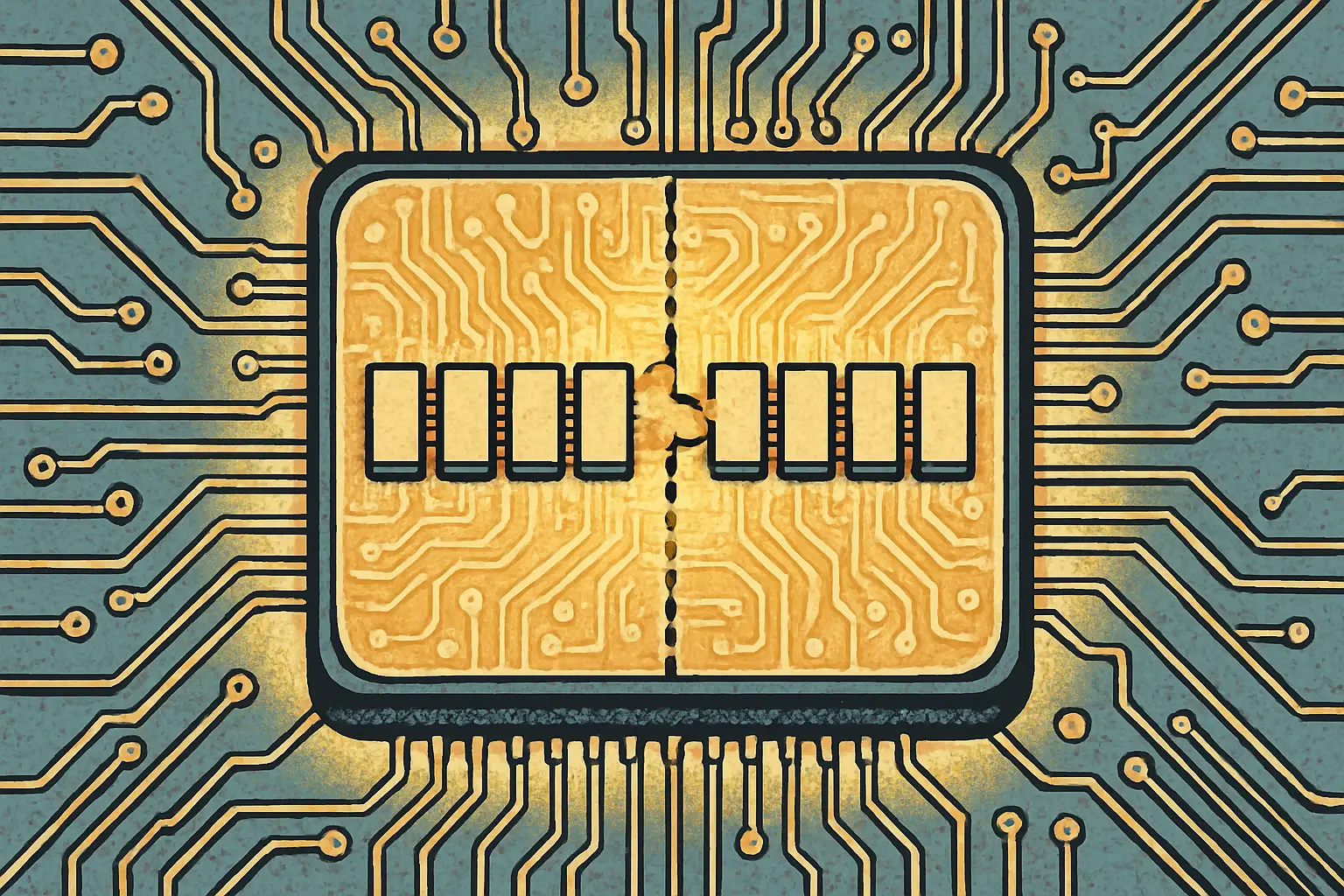
Mainframes and Arm servers have spent a decade in separate rooms. On August 24, 2026, at the Hot Chips conference, IBM said its next-generation processor for IBM Z and LinuxONE will put them on the same core. Not a translation layer, not an emulator, and not a block of Arm cores bolted onto a corner of the die — each of the eleven physical cores executes both z/Architecture and Arm instructions natively.
- The chip is built on a 2-nanometer process with 11 high-performance cores running above 5.7 GHz
- Switching a core between architectures happens on what IBM describes as a nanosecond scale, with the KVM hypervisor dispatching virtual machines to the appropriate mode
- On-processor AI inference engines target transaction-level fraud detection, alongside a next-generation Spyre accelerator card previewed for large language model work
- The design is the first silicon milestone from the IBM and Arm collaboration announced in April 2026, and scales to hundreds of cores and tens of terabytes of memory
Why a Dual-Architecture Core Is a Genuinely Hard Trick
Instruction sets are not interchangeable skins over the same machine. They differ in register models, memory ordering rules, condition-code behavior, and exception semantics. Running both on shared execution hardware means the decode path and the memory subsystem have to honor two contracts without a performance tax on either — which is precisely what IBM is claiming.
The strategic reading is simpler than the engineering one. Enterprises with mainframe estates increasingly want to run Arm-native Linux software next to z/OS: container tooling, observability agents, open-source databases, and the long tail of infrastructure that assumes Arm or x86. Today that means a second fleet of machines and a network hop between them. IBM Chief Product Officer Tina Tarquinio framed it as, in her words, a big "and" rather than an "or."
What Does This Mean for Enterprise AI Workloads?
The AI story here is not about training frontier models. It is about putting inference where the transaction already is. On-processor inference engines let a fraud model score a payment inside the transaction rather than in a downstream service, which removes a network round trip from a path measured in milliseconds.
The dedicated Spyre accelerator card handles the heavier tier: large language models for agentic workflows, document understanding, and insurance adjudication. That is a coherent split — cheap, always-on scoring on the CPU, and heavyweight generative work on an attached accelerator, both sitting next to the system of record instead of across a data center from it.
Christian Jacobi, IBM Fellow and CTO for IBM Z, called the design a significant architectural advancement for the platform, and Arm's Mohamed Awad framed it as extending Arm's software ecosystem into mission-critical enterprise infrastructure.
When Does It Arrive?
IBM did not commit to a date in the announcement. Its mainframe generations have followed a roughly three-year cadence, and z17 shipped in the second quarter of 2025, which points to a 2028 window. That is a long runway, and it is worth treating the specifications as design targets rather than measured silicon until the part ships.
Even at that distance, it is a notable direction of travel. Custom and hybrid silicon has been the defining infrastructure story of 2026, from Marvell's custom TPU work with Google to wafer-scale inference parts, and IBM's contribution is to make the oldest architecture in enterprise computing bilingual. More coverage of AI infrastructure lives on our artificial intelligence page, including IBM's enterprise AI partnership with OpenAI.
Sources: IBM Newsroom — August 24, 2026; VentureBeat — August 24, 2026; Moor Insights & Strategy — August 2026.
More AI Stories

Claude Haiku 5.5 Pricing: What a 90% Cheaper Haiku Unlocks
Claude Haiku 5.5 launches at $0.10 per million input tokens with a 1M context window, adjustable effort, and a 72.4% OSWorld score, up from 15.7%.

ChatGPT Intelligent UI: What GPT-6 Changes for Free Users
GPT-6 with Intelligent UI rolls out to every ChatGPT tier, turning answers into charts, maps and calculators, and Free and Go users get it from October 8.

NVIDIA Nemotron Olympiad Recipe: What the Open Release Means
NVIDIA open-sourced the Nemotron 3 recipe behind a 535.4/600 IOI 2026 run and a gold-level 30/42 IMO score, with checkpoints, data and a new benchmark.