
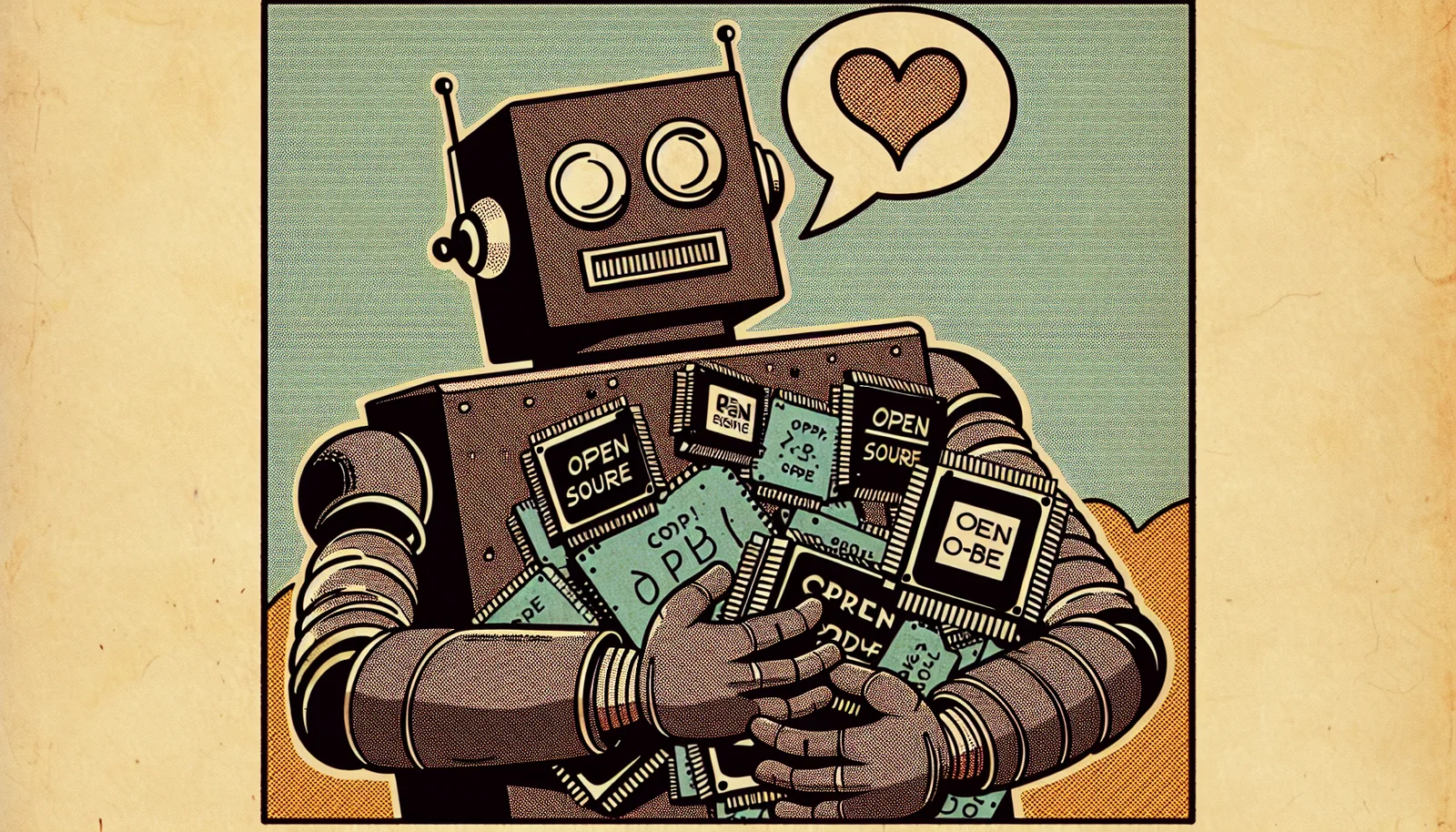
Hugging Face Acquires ggml.ai, Giving llama.cpp a Permanent Open-Source Home
Hugging Face acquires ggml.ai, bringing llama.cpp and the GGUF model format under its umbrella while keeping everything MIT-licensed and open-source for local AI inference.

In what might be the most consequential open-source AI acquisition of the year, Georgi Gerganov — the creator of llama.cpp — announced on February 20 that ggml.ai is joining Hugging Face.
What Is Changing
The acquisition brings llama.cpp, whisper.cpp, the ggml C tensor library, and the GGUF model format under the Hugging Face umbrella. These projects form the backbone of local AI inference — they are the reason millions of developers and enthusiasts can run large language models on their own laptops, desktops, and edge devices without cloud dependencies.
Critically, all projects remain 100% open-source under their existing MIT licenses. The ggml team retains full technical autonomy and decision-making authority over the codebases.
Why This Matters
Hugging Face hosts over one million models on its platform, making it the largest open model hub in the world. llama.cpp is arguably the single most important project for running those models locally on consumer hardware. The combination creates a natural pipeline: discover a model on Hugging Face, download it, and run it locally through llama.cpp — potentially with single-click simplicity.
The partnership's primary goal is enabling seamless deployment of models from Hugging Face's ecosystem directly to llama.cpp for local inference. Think of it as connecting the world's largest model library to the world's best local inference engine.
Long-Term Sustainability
Open-source infrastructure projects often struggle with long-term funding and maintainer burnout. By joining Hugging Face, the ggml team gains institutional backing and resources while maintaining the independence that made their projects successful in the first place.
For anyone who believes that running AI models privately on your own hardware is important — and that community should include more than just cloud-first approaches — this is a landmark moment.
---
*Sources: Hugging Face blog (Feb 20, 2026), Simon Willison's blog (Feb 20, 2026), WinBuzzer (Feb 22, 2026)*
More AI Stories

Gemini Agent for Work: What Google's Universal Agent Does
Google's new Gemini agent runs multi-day jobs in the cloud, routes work across Gemini and Claude models, and adds hard spend caps for business teams.
Liquid AI d1 Models: Open Decision AI That Answers in 8 ms
Liquid AI's open d1-3B and d1-omni-600M decision models skip token generation and answer in one pass, as fast as 8 ms on an RTX 4090 and 50 ms on Jetson.

Claude Haiku 5.5 Pricing: What a 90% Cheaper Haiku Unlocks
Claude Haiku 5.5 launches at $0.10 per million input tokens with a 1M context window, adjustable effort, and a 72.4% OSWorld score, up from 15.7%.