
Grok Bot Beta Gives AI Agents a Real Cloud Computer
SpaceXAI's Grok Bot beta gives AI agents a persistent cloud computer and real app logins across 3 tiers, with approval gates on purchases and deletions.

Grok Bot Brings Always-On AI Agents Into Everyday Apps
SpaceXAI opened the early beta of Grok Bot on August 11, 2026, and the premise is unusually literal. Instead of shipping another API for developers to wire into a pipeline, the company hands you a cloud computer and lets AI agents work on it the way a person would — opening a browser, signing into the tools you already pay for, and pushing multi-step jobs through to the end while you are doing something else. SpaceXAI calls them teammates, and for once the metaphor earns its keep.
- Grok Bot entered early beta on August 11, 2026, with agents that work across apps, inboxes, and websites without requiring an API integration
- All of a user's Bots share one persistent cloud computer tied to that account, with each Bot getting its own screen so several can work in parallel
- Access is bundled into three existing tiers: SuperGrok Heavy, Cursor Ultra at $200 per month, and Cursor Teams Premium at $120 per seat per month
- Approvals are required before sending messages, publishing content, making purchases or transfers, deleting data, changing permissions, and accepting legal terms
What Is Grok Bot and How Does It Work?
Each Grok Bot session runs on a cloud machine with a browser, a filesystem, and a terminal. That combination is the whole idea. Because the agent drives real software through a real screen, it is not limited to services that happen to expose a clean API — it can work in the long tail of internal dashboards, admin panels, and legacy web tools that never shipped an integration. SpaceXAI says early internal users pointed Bots at CRM updates, invoice processing, and software debugging.
Two design details stand out to me. The first is that Grok Bot learns by demonstration: you walk it through a workflow once, and it retains the preferences and context for next time rather than starting cold on every request. The second is coordination. Multiple Bots can run at the same time, message each other, share threads, and work together in a group chat, which turns a single agent into something closer to a small crew with a shared task list.
One Shared Cloud Computer, One Screen Per Bot
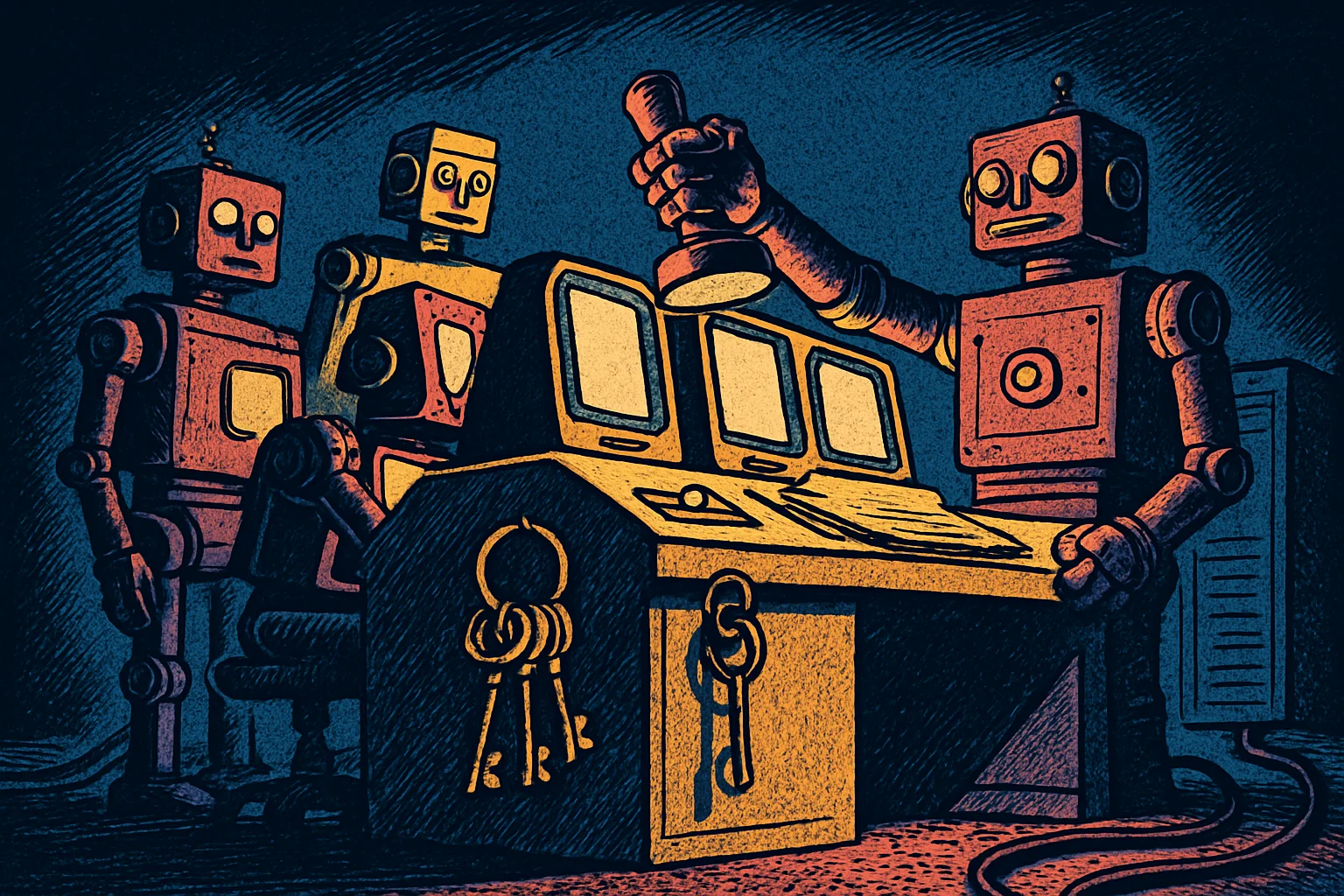
Here is the detail worth reading carefully before you plan a deployment. SpaceXAI's documentation is explicit that all of your Bots share one cloud computer assigned to your user account — files, browser sessions, and app logins on that machine are available across your entire Bot roster. Each Bot gets its own screen on that shared machine, which is what allows several of them to use browser and desktop tools at once.
The company is admirably direct about what that means, stating in its own docs that separate Bots should not be treated as a security boundary, and pairing that with practical housekeeping guidance: sign out of services, remove connectors, and delete sensitive files when access should end.
I read this as a deliberate trade rather than an oversight. A shared account-level machine is exactly what makes handoffs between Bots seamless — one agent gathers the data and leaves it where the next one can pick it up, no plumbing required. Teams that need hard isolation between workloads should draw that line at the account level instead, and the growing crop of agent sandboxing tools is a useful complement here. Our earlier look at open-source containment for coding agents covers that pattern in more depth.
What Actions Require Your Approval?
Autonomy without brakes would be a hard sell, and SpaceXAI has drawn the line in a sensible place. Grok Bot pauses and asks before it sends messages or invitations, publishes content, makes purchases or financial transfers, deletes or overwrites data, changes permissions, makes production changes, or accepts legal terms. Everything else it simply finishes, surfacing only when it genuinely needs a decision rather than checking in at every step.
Users can also set boundaries directly in a request, and configure Auto Review rules to either always require approval or always allow a specific class of action. That is the right shape for this kind of product: the default is cautious, and the loosening is opt-in and explicit.
Who Can Use Grok Bot Right Now?
Grok Bot is bundled into three existing subscriptions rather than sold separately — SuperGrok Heavy, Cursor Ultra, and Cursor Teams Premium. Unite.AI reports Cursor Ultra at $200 per month, and the Teams Premium tier at $120 per seat per month, adding centralized billing, a team marketplace, shared analytics, and SAML or OIDC single sign-on. Enterprise customers are being routed to a waitlist, with the beta rolling out gradually by organization.
On platforms, desktop builds cover macOS and Windows, an iOS app is available, and Android is listed as coming soon. The timing lines up neatly with the model side of the house — Grok 4.6's 500K context window was built for exactly the kind of long-running, self-verifying work that an always-on teammate demands.
The Takeaway
Grok Bot is one of the clearest expressions yet of where agents are heading in 2026: away from narrow API-bound automations and toward software that simply uses your software. The shared-computer model is a genuine architectural choice with real planning implications, and SpaceXAI deserves credit for documenting it plainly rather than burying it. If you already hold one of the eligible subscriptions, the beta is worth a careful pilot on a low-stakes workflow — and it is a good moment to browse the rest of our artificial intelligence coverage for how the wider agent ecosystem is maturing around it.
Sources: SpaceXAI — Introducing Grok Bot — August 11, 2026; SpaceXAI Docs — Approvals, security, and privacy — August 2026; Unite.AI — August 2026; Tech Times — August 12, 2026.
More AI Stories

Strands Decider 2B: What Amazon's Free Decision Model Does
Strands Decider 2B is a free 2B-parameter decision model that picks options in about 115ms on a single GPU. Here is how it works and where it fits.

Meta Muse Gadgets SDK: Build Your Own AI Agent Hardware
Meta's open-source Muse Gadgets SDKs bring its Muse agent to Raspberry Pi and ESP32 builds, and 5,000 free Home Link dongles are going to subscribers.

AstaBrief 8B: Ai2's Open Model for Cited Science Reports
AstaBrief 8B is Ai2's Apache 2.0 open model that writes cited research reports in 51 seconds, 3.5x faster than its Claude pipeline. Here is how it works.