
Project Suncatcher: Google's First AI Answer From Orbit
Google's Project Suncatcher satellite ran Gemma 4 on a TPU in orbit and sent back its first answer, a haiku. Twin linked satellites are planned for 2027.

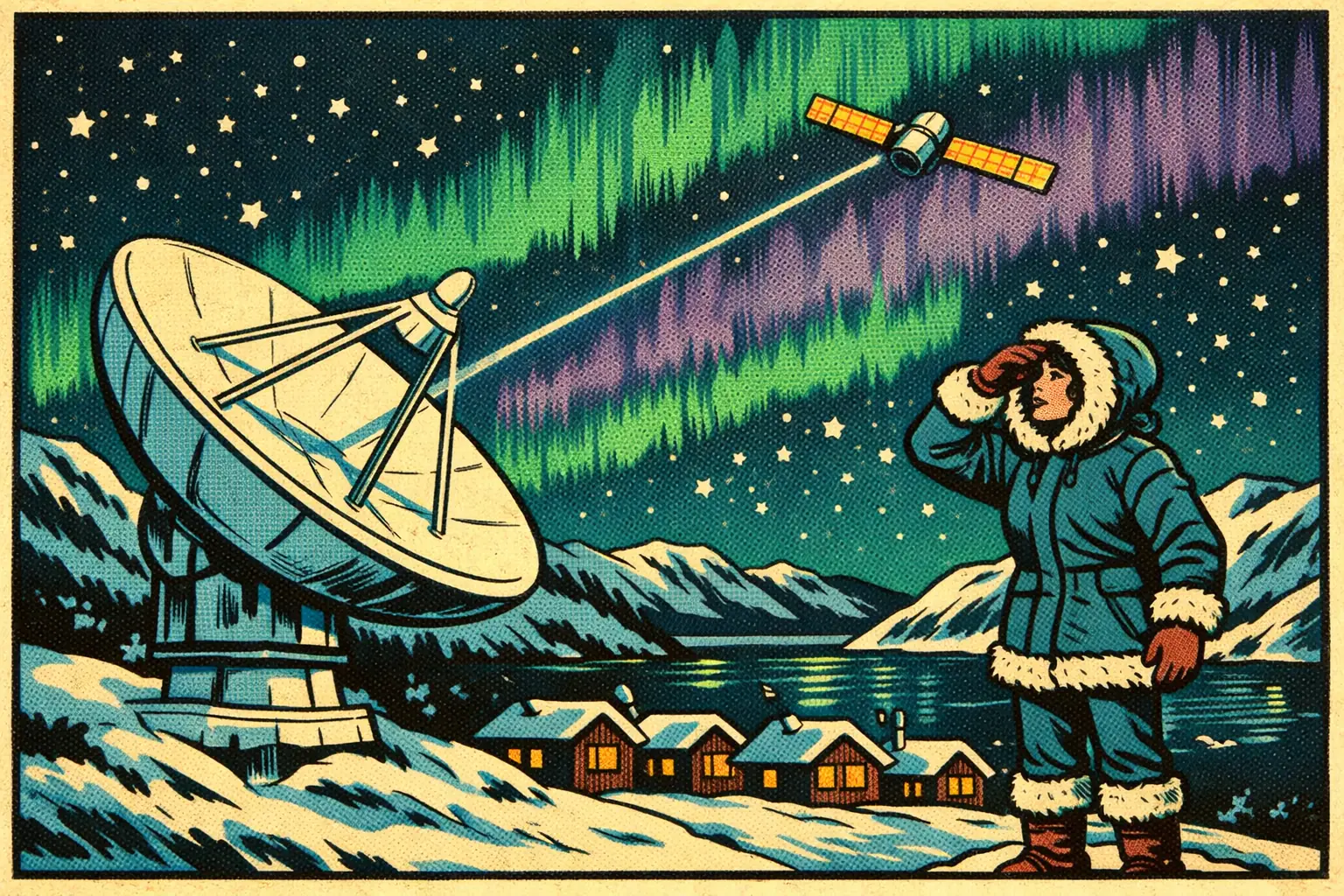
For the first time, a data-center-class AI chip in low Earth orbit has answered a prompt from the ground. Google said on October 30, 2026 that the prototype satellite for Project Suncatcher, its long-term research effort to explore running AI compute in space, reached its "Hello World" milestone: an onboard Gemma 4 model received a prompt during a ground-station pass and sent back a short poem about being in orbit.
- Milestone: First AI inference response from a data-center-class TPU in orbit, confirmed October 30, 2026
- Model: Google's open Gemma 4 model, running on the satellite's onboard TPU tray
- Launch: The prototype satellite went up on October 1, 2026
- Next step: Twin interconnected satellites planned for 2027
What Happened on the Suncatcher Satellite?
According to Google's announcement, written by Travis Beals, senior director of the company's Paradigms of Intelligence team, engineers spent the weeks after launch working through a commissioning checklist. That included powering up the host computer and the TPU trays and running early machine learning tests. Once those passed, the team uplinked its first prompt to the onboard Gemma 4 model, asking for a haiku about being in space. The answer came back as the satellite passed over Svalbard, Norway, a three-line verse about a blue marble below and starlight feeding its core.
It is a playful first output, but the point is serious. Google then ran space-themed limericks and telemetry prompts, where the model reports the technical status of the payload systems. That second kind of test matters more: it shows the model doing useful housekeeping work on the same hardware it lives on.
Why Run AI Compute in Space at All?
The idea behind Project Suncatcher is energy. Solar panels in orbit see far more consistent sunlight than panels on the ground, and AI data centers are hungry for power. The Register, reporting on the milestone on October 31, cited Google's own research estimate: if launch costs fall to around $200 per kilogram, the amortized launch cost per kilowatt per year could be roughly comparable to what US terrestrial data centers spend on electricity today. That is a projection, not a promise, and Google frames Suncatcher as a moonshot that it wants to prototype well before those launch prices arrive.
Rather than one giant orbital server farm, Google expects a constellation of many smaller satellites that talk to each other. That is why the 2027 milestone, two linked satellites, is the one to watch.
How Tough Are TPUs Against Radiation?
Space is hard on chips. Before launch, Google tested its Trillium Cloud TPU and host server under a proton beam. As The Register summarized from Google's published paper, the high-bandwidth memory was the most sensitive component, yet it handled about three times the minimum radiation dose Google requires before showing irregularities. The researchers estimated silent data errors at roughly one per three million inferences under expected orbital conditions, which they consider acceptable for inference. Training workloads need more study.
The next phase of on-orbit testing will look at exactly this: how the TPUs behave under real thermal stress and radiation exposure.
What This Means for AI Infrastructure
Two things stand out to me. First, Google chose an open model, Gemma 4, for its first orbital inference, the same family developers already run locally (see our look at Gemma 4 speedups on Apple Silicon). Second, the business of space infrastructure is clearly converging with AI, a trend also visible in SpaceX's latest earnings.
A haiku will not power anyone's chatbot. But a TPU that boots, computes and reports back from orbit turns a research paper into working hardware, and that is how every new computing platform starts. For more on frontier research, browse our AI coverage.
Sources: Google, The Keyword: Project Suncatcher prototype satellite response — October 30, 2026; The Register: Google's AI satellite sends a very expensive haiku to Earth — October 31, 2026.
More AI Stories

OpenAI Model Spec Update: The 5 Values Now Guiding GPT
OpenAI's updated Model Spec reorganizes GPT's behavior around 5 core values, adds guidance on context and human agency, and retires most style rules.

Gemini File Editing: Create Docs, PDFs and Slides in Chat
The Gemini app can now generate, preview and edit PDFs, Docs, Sheets and slide decks inside a chat, free for all users in every language Gemini supports.

IBM Granite Switch 4.1.1: Updating AI Models Like Software
IBM's Granite Switch 4.1.1 adds 10-language speech recognition and a sharper Decision adapter without retraining the base model. Here is how it works.