
Flipper One Lands — A Rockchip RK3576 + RP2350 Open-Hardware Arm Linux Multitool With Mainline Kernel, Wi-Fi 6E, and 10GbE Emulation
Flipper Devices officially unveiled the Flipper One on May 21, 2026 — a Rockchip RK3576 portable Arm Linux multi-tool with an RP2350 sidecar, mainline kernel support via Collabora, and a sub-$350 target price.

Flipper Devices Just Pulled the Cover Off the Open-Hardware Linux Pocket Computer Tinkerers Have Been Asking For
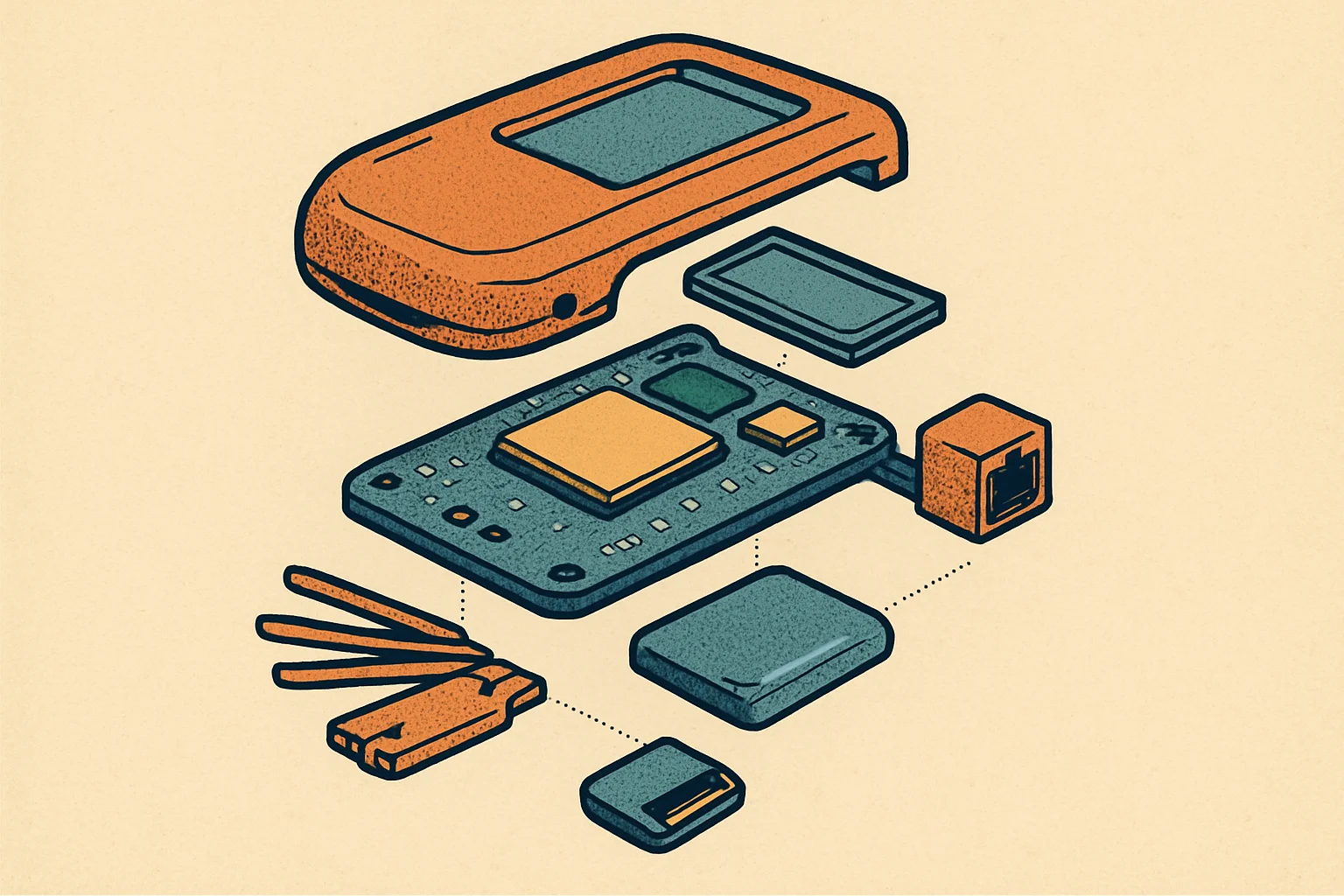
Flipper Devices officially introduced the Flipper One on May 21, 2026, and for anyone who has been watching the open-hardware single board computer scene, this is the announcement that has been quietly building since the original Flipper Zero shipped. The Flipper One is a portable Arm Linux platform and networking + Edge AI multi-tool powered by a Rockchip RK3576 octa-core SoC, paired with a Raspberry Pi RP2350 microcontroller acting as a low-level sidecar. It targets a sub-$350 base price, ships with mainline Linux kernel support thanks to a partnership with Collabora, and exposes a full M.2 Key-B slot for 5G modems, SDR modules, NVMe SSDs, and adapter-based Wi-Fi cards. The device is a prototype and not yet for sale — Flipper is opening the door to community contributions while the platform finishes coming together.
For the single board computer crowd, the homelab community, the security-research community, and anyone who has wanted a pocketable Arm Linux machine that does not lock them out of the firmware layer, the Flipper One is one of the most interesting hardware announcements of 2026 so far.
What Sits Inside the Flipper One Hardware
The core compute is the Rockchip RK3576, which packs four Cortex-A72 performance cores and four Cortex-A53 efficiency cores, an Arm Mali-G52 GPU with Vulkan 1.2 support, and a 6 TOPS NPU for on-device AI inference. The base unit ships with 8 GB of LPDDR5 RAM and 64 GB of UFS 2.2 storage — a configuration that comfortably runs a full Linux desktop class workload, drives the on-board display, and leaves enough headroom for Edge AI inference work on the integrated NPU.
The RP2350 Sidecar Is the Detail That Makes the Architecture Smart
The Raspberry Pi RP2350B microcontroller is the architectural detail worth pausing on. It independently controls the LCD, touchpad, buttons, LEDs, and power subsystem — even when the Linux environment is completely shut down. That separation gives the Flipper One the responsiveness of a dedicated embedded device for the user-facing controls while the Linux side handles the heavy lifting. It also means power management, peripheral responsiveness, and safe shutdown semantics are owned by a microcontroller rather than depending on the full Linux kernel staying healthy.
Connectivity That Reads Like a Networking Tinkerer's Wish List
The connectivity stack is the part of the spec sheet that genuinely surprised me. Two Gigabit Ethernet ports for routing experiments. Wi-Fi 6E and Bluetooth for wireless work. A USB-C port capable of multi-gigabit Ethernet emulation that effectively lets the Flipper One present itself as a high-speed network adapter to a host machine. A full-size HDMI 2.1 port with 4K@120Hz output for desktop-class display. And the M.2 Key-B slot that exposes PCIe, USB, SATA, and SIM interfaces — which means a single slot supports 5G/4G LTE cellular modems, NVMe SSDs, software-defined radio modules, or Wi-Fi cards via adapters.
Why the M.2 Slot Is the Real Hardware Story
Most pocket Arm Linux platforms in this class lock the user out of the radio stack. The M.2 Key-B slot on the Flipper One inverts that constraint. Want to add LoRa? Drop in an SDR. Want to add 5G? Add an M.2 modem. Want fast local storage? Add an NVMe. The slot is the structural choice that makes the Flipper One a true multi-tool rather than a fixed-function device.
The Open-Source Software Story Is the Differentiator
The detail that separates the Flipper One from the broader Arm SBC field is the software approach. Flipper Devices partnered with Collabora to push full mainline Linux kernel support for the RK3576 SoC, with a target of zero binary blobs, no vendor-locked board support packages, and no proprietary firmware. The device is designed to run kernels downloaded directly from kernel.org without vendor patches.
Why Mainline Linux Without Vendor Blobs Matters
For the maker community and the security research community, the value of mainline-first Linux support is enormous. It means the kernel is auditable. The drivers are upstreamable. Long-term software maintenance does not depend on whether a chip vendor decides to keep supporting the device. The platform's useful lifespan becomes a function of community interest rather than vendor product roadmaps — which is the right architecture for an open-hardware multi-tool.
How the Flipper One Lands Against the Broader Single Board Computer Field
The Flipper One is not directly competing with the Raspberry Pi 5, the ODROID-H5, or the SpacemiT K3 Pico-ITX. Each of those targets a slightly different workload — desktop SBC, homelab SBC, RISC-V workstation. The Flipper One is the portable, screen-and-input-included, networking-multi-tool option in the broader SBC family. The closest comparison is probably the original Flipper Zero scaled up to a full Linux compute platform — and the design language across the device makes the heritage obvious.
The Open-Hardware Filing Cabinet Just Got Another Useful Drawer
For the maker community, the broader hardware story is that the open-hardware SBC category keeps adding shape diversity. Pico-ITX boards. Mini-ITX boards. Compact rugged SBCs. Server-class multi-node SBCs. And now portable Arm Linux multi-tools with built-in displays and a microcontroller sidecar. Each new shape opens up a different class of project.
The Setup Going Forward
The Flipper One is not yet for sale. Flipper Devices is openly inviting community contributions while the platform finishes coming together — software, drivers, peripheral support, and mainline kernel work are all paths where outside contributors can land code. The base price target is sub-$350. The next watch items are the cadence of mainline kernel patches landing for the RK3576, the M.2 peripheral ecosystem that develops around the slot, and the launch-availability timeline once the prototype graduates to production. For pocket Linux fans, security researchers, and anyone tracking open-hardware SBC progress, the Flipper One is the announcement worth following closely through the rest of 2026.
Sources: CNX Software, May 21, 2026; The Register, May 21, 2026; Tom's Hardware, May 21, 2026; Collabora news, May 21, 2026; XDA Developers, May 21, 2026.
More Mini Computers Stories

Raspberry Pi Net Zero: How Pi Towers Swapped Gas for Pis
Raspberry Pi replaced a £150,000 building system with a £7,800 Pi-based one at Pi Towers, cut gas entirely in June 2026, and targets net zero in 2027.

Q8botOne Robot Dog: A Palm-Sized Open ESP32-C3 Quadruped
Q8botOne is a palm-sized open-source robot dog with an ESP32-C3 brain and 8 DYNAMIXEL actuators, from $199 as a kit or $599 assembled on Crowd Supply.

Surface RTX Spark Dev Box: Is a $5,999 AI Box Worth It?
Microsoft opened Surface RTX Spark Dev Box pre-orders at $5,999: 128GB unified memory, up to 1 petaflop FP4, and support for 120B-plus parameter models.