
Espressif's ESP32-S31 Brings Gigabit Ethernet, Wi-Fi 6, and 802.15.4 to a Dual-Core RISC-V Microcontroller
Espressif documented two ESP32-S31 development boards on May 22, 2026 — the most feature-rich ESP32 to date, with dual RISC-V cores, gigabit Ethernet, Wi-Fi 6, Bluetooth, and 802.15.4 connectivity.

Espressif Is About to Make the ESP32 the First Microcontroller With Gigabit Ethernet and Wi-Fi 6 in the Same Package
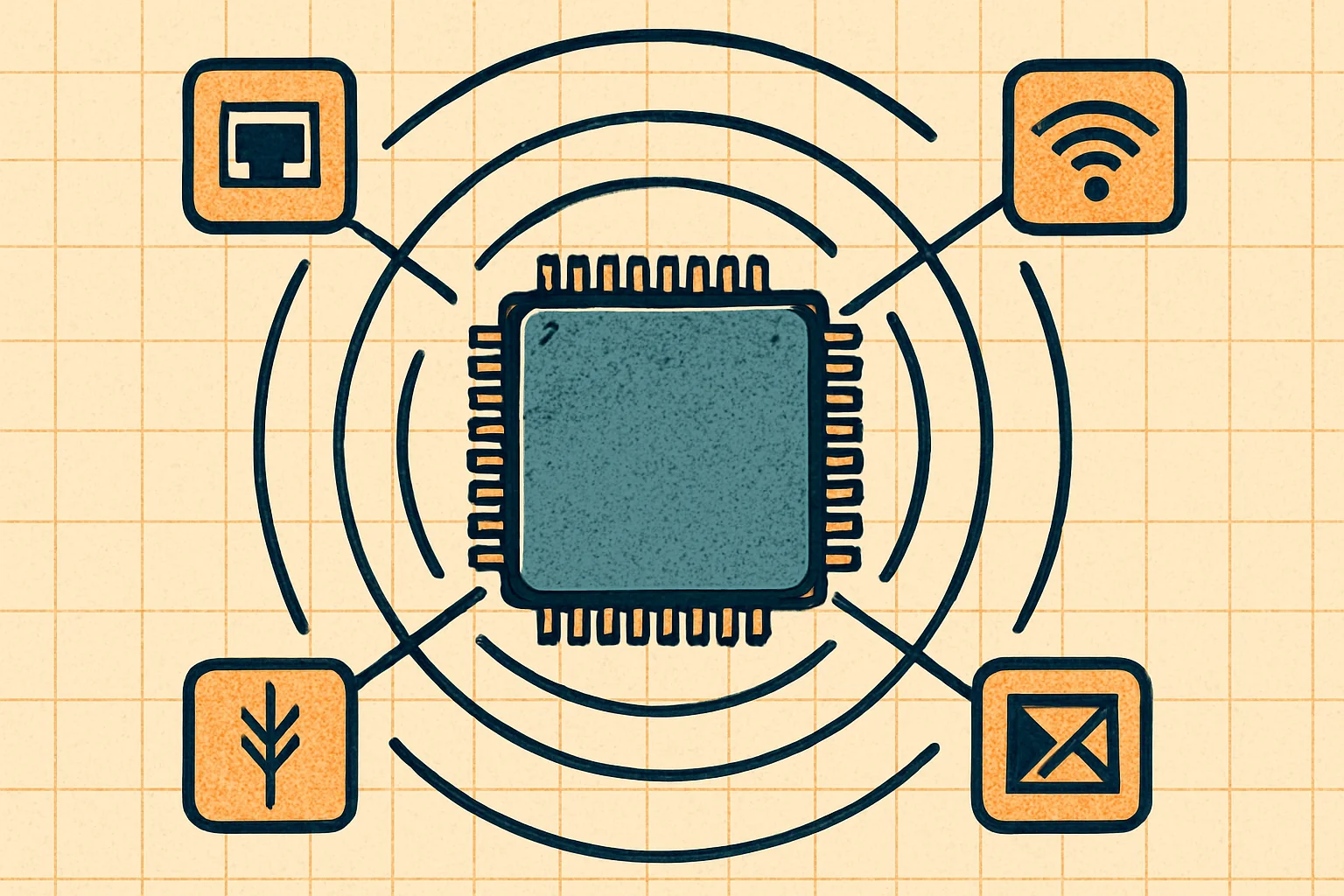
Espressif's ESP32-S31 quietly stepped into public documentation on May 22, 2026, and for anyone who has been tracking the microcontroller side of the maker scene, this is the headline release of the spring. Two new development boards — the ESP32-S31-Function-CoreBoard-1 and a sibling — were spotted by CNX Software with their documentation already published. The spec sheet positions the ESP32-S31 as the most feature-rich ESP32 wireless microcontroller to date: dual RISC-V cores, a Gigabit Ethernet MAC, 2.4 GHz Wi-Fi 6, Bluetooth, 802.15.4 connectivity for Thread and Matter, LCD and camera interfaces, and onboard audio peripherals on the Function-CoreBoard-1.
For embedded developers, IoT product engineers, and the Matter/Thread connected-home ecosystem watching how microcontroller capabilities catch up to where networks are heading, this release lands at exactly the right moment.
The ESP32-S31 Architecture — Dual RISC-V Cores, Wi-Fi 6, and a Gigabit MAC
The defining structural change in the ESP32-S31 is the move to two RISC-V cores plus a packed wireless and networking stack that previous ESP32 generations could not fit in the same envelope. Wi-Fi 6 means OFDMA, BSS coloring, and the latency and density benefits that the 802.11ax standard brings to constrained devices. Gigabit Ethernet, with the MAC integrated into the SoC rather than added via an external PHY-only adapter, means the device can credibly serve as the wired endpoint in a smart-home or industrial-IoT design without bottlenecking on the network side.
Why 802.15.4 Is the Quiet Hero of the Spec Sheet
The 802.15.4 radio is the spec sheet line item that matters most for the connected-home category. Thread, Zigbee, and Matter all sit on top of 802.15.4. Putting a Thread/Matter-capable radio in the same package as a Wi-Fi 6 radio and a Gigabit Ethernet MAC turns the ESP32-S31 into a genuine border-router-class chip — a single microcontroller can speak to mesh devices on 802.15.4, talk to the rest of the home network on Wi-Fi 6, and have a wired fallback for installations where the Wi-Fi spectrum is congested. That is the right architecture for the next generation of smart-home hubs.
The ESP32-S31-Function-CoreBoard-1 Reference Design
The first development board, the ESP32-S31-Function-CoreBoard-1, is built around the ESP32-S31-WROOM-3 wireless module and adds Gigabit Ethernet, USB 2.0 OTG, and onboard audio peripherals. The board is positioned as a connected IoT reference design — the kind of board a product team picks up to evaluate the chip before committing to a custom carrier design.
Audio + Ethernet + Wi-Fi 6 + Thread Is a Smart-Home Hub on a Single Board
The combination of onboard audio peripherals with the full networking stack is what makes the Function-CoreBoard-1 interesting beyond pure IoT prototyping. A smart-home hub does not just route packets — it answers wake words, plays back tones and prompts, and surfaces audio notifications. Having the audio I/O on the reference board means evaluation projects can build a complete hub class device against the ESP32-S31 without bolting on a separate audio codec board.
How the ESP32-S31 Compares to the Broader Microcontroller Field
Espressif's broader strategy has been to keep packing more networking and compute into the ESP32 family while maintaining the developer experience that made the original ESP32 so widely adopted. The ESP32-S31 continues that trajectory aggressively. Gigabit Ethernet on a microcontroller has historically been the province of bigger SoCs like the i.MX8 family. Wi-Fi 6 on a constrained-power device has been showing up across Wi-Fi chip vendors but has not been standard on a general-purpose microcontroller. The ESP32-S31 puts both inside the same package alongside Bluetooth and 802.15.4 — which is the consolidation step that opens up new product categories.
The Maker Community Picks Up the New ESP32 Generation Quickly
One reason the ESP32 platform has stayed influential is that the maker community picks up each new generation almost immediately. The Arduino IDE integrates support quickly, ESP-IDF documentation lands at the same time as silicon availability, and the broader knowledge base on Hackaday and the Espressif forums covers the new chip within weeks of launch. The ESP32-S31 will benefit from that same flywheel — by the time the development boards are widely available, there will already be community projects, demo code, and integration guides ready to use.
Why This Matters for the Connected-Home Ecosystem
Matter and Thread have been adding device categories steadily, and the bottleneck for many product teams has been the chip-level cost of a credible border-router-capable design. With Gigabit Ethernet, Wi-Fi 6, Bluetooth, and 802.15.4 all on one microcontroller, the ESP32-S31 collapses the bill of materials for that class of device. A vendor can ship a Matter hub at a more attractive price point without sacrificing the network and protocol coverage that the hub category needs.
The Setup Going Forward
The ESP32-S31 documentation is live, the development boards are in the works, and the broader ESP-IDF tool support will follow standard Espressif cadence. The next watch items are the chip-availability timeline for production designs, the pricing of the WROOM-3 module that the Function-CoreBoard-1 is built on, and the rollout of the Thread/Matter integration code that lets developers bring up a connected-home hub against the new silicon. For embedded teams, IoT product engineers, and the Matter ecosystem broadly, the ESP32-S31 is the chip that is worth designing against for the next generation of connected-home products.
Sources: CNX Software, May 22, 2026; Espressif Systems product documentation, May 22, 2026; CNX Software ESP32-S31 board coverage, May 2026.
More Mini Computers Stories

Raspberry Pi Net Zero: How Pi Towers Swapped Gas for Pis
Raspberry Pi replaced a £150,000 building system with a £7,800 Pi-based one at Pi Towers, cut gas entirely in June 2026, and targets net zero in 2027.

Q8botOne Robot Dog: A Palm-Sized Open ESP32-C3 Quadruped
Q8botOne is a palm-sized open-source robot dog with an ESP32-C3 brain and 8 DYNAMIXEL actuators, from $199 as a kit or $599 assembled on Crowd Supply.

Surface RTX Spark Dev Box: Is a $5,999 AI Box Worth It?
Microsoft opened Surface RTX Spark Dev Box pre-orders at $5,999: 128GB unified memory, up to 1 petaflop FP4, and support for 120B-plus parameter models.