
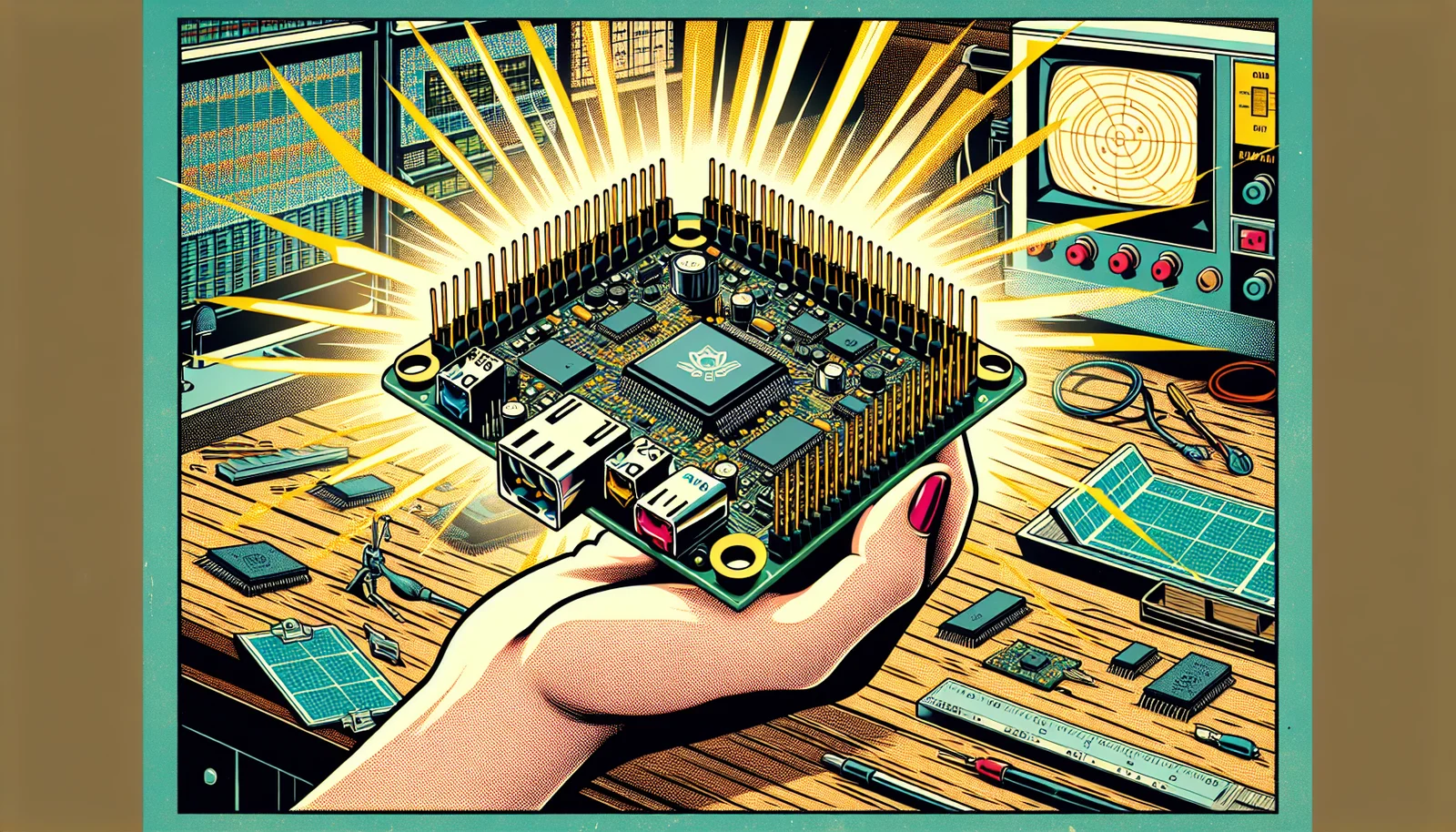
ESP32-P4-Pi-VIEWE Brings Raspberry Pi's 40-Pin GPIO to a 400 MHz RISC-V Board
The ESP32-P4-Pi-VIEWE combines a 400 MHz dual-core RISC-V microcontroller and Wi-Fi 6 with a Raspberry Pi-compatible 40-pin GPIO header for next-generation maker projects.

The ESP32 Gets a Raspberry Pi Form Factor — and Wi-Fi 6
The maker hardware world got an interesting new piece of silicon to play with on March 27, 2026. Spotted via CNX Software, the ESP32-P4-Pi-VIEWE is a new development board from VIEWE that pairs Espressif's most powerful microcontroller — the dual-core RISC-V ESP32-P4 — with an ESP32-C6 wireless co-processor and wraps it all in a form factor that should look immediately familiar to anyone who's spent time with Raspberry Pi hardware: a 40-pin GPIO header following the standard Raspberry Pi pin layout.
For makers who want the HAT ecosystem compatibility of a Raspberry Pi but need the real-time control capabilities and low power consumption of a microcontroller, this combination is genuinely interesting.
The ESP32-P4: Espressif's Most Capable MCU
The ESP32-P4 is the main compute engine here. Running twin high-performance RISC-V cores at up to 400 MHz, the chip is Espressif's most capable embedded processor to date — featuring a built-in 2D graphics acceleration engine, MIPI DSI and CSI display/camera interface support, 16MB of integrated octal-SPI PSRAM, and hardware-accelerated cryptographic operations. For a microcontroller, this is a serious amount of compute and memory bandwidth.
The graphics and camera capabilities in particular make the ESP32-P4 a strong foundation for edge AI computer vision, display-centric IoT devices, and industrial HMI applications — use cases that would previously have required either a Linux-based SBC (with all its associated overhead) or expensive custom hardware.
Two Chips, Better Together
The ESP32-P4 handles the heavy lifting but lacks built-in wireless connectivity — which is where the ESP32-C6 co-processor comes in. This secondary chip provides Wi-Fi 6 (802.11ax), Bluetooth 5.0 with Bluetooth Mesh, and IEEE 802.15.4 for Zigbee and Thread protocol support, giving the board a complete modern wireless stack without external radio modules. The two chips communicate via high-speed SPI.
This dual-chip architecture mirrors similar approaches used in other recent embedded designs and provides a practical benefit: regulatory certification for the RF components can be handled separately from the application processor, simplifying the path to production for commercial device makers.
Raspberry Pi HAT Compatibility Opens a Huge Ecosystem
The 40-pin GPIO header following the Raspberry Pi pin layout is the feature that will get the maker community most excited. Over fifteen years of the Raspberry Pi ecosystem, an enormous library of compatible HATs and expansion boards has accumulated — accelerometers, motor controllers, relay boards, display drivers, environmental sensors, and much more. Keeping the standard pinout means ESP32-P4-Pi-VIEWE projects can tap that ecosystem directly.
The board also includes a 10/100Mbps Ethernet port, MIPI DSI for touch displays, and a MIPI CSI camera connector — making it notably well-equipped for vision and display applications compared to most microcontroller development boards.
Where This Board Fits
The ESP32-P4-Pi-VIEWE occupies an interesting niche: more capable than a standard ESP32 development board, significantly less power-hungry than any Linux-based SBC, and potentially better suited to real-time control and low-latency sensor applications than a Raspberry Pi running a full operating system. For edge AI camera nodes, smart home controllers, industrial sensor hubs, and display-driven IoT devices that need HAT ecosystem compatibility without Linux overhead, this board is worth a close look.
Sources: CNX Software (March 27, 2026), Espressif Systems (2025), VIEWE (March 2026)
More Mini Computers Stories

Raspberry Pi Net Zero: How Pi Towers Swapped Gas for Pis
Raspberry Pi replaced a £150,000 building system with a £7,800 Pi-based one at Pi Towers, cut gas entirely in June 2026, and targets net zero in 2027.

Q8botOne Robot Dog: A Palm-Sized Open ESP32-C3 Quadruped
Q8botOne is a palm-sized open-source robot dog with an ESP32-C3 brain and 8 DYNAMIXEL actuators, from $199 as a kit or $599 assembled on Crowd Supply.

Surface RTX Spark Dev Box: Is a $5,999 AI Box Worth It?
Microsoft opened Surface RTX Spark Dev Box pre-orders at $5,999: 128GB unified memory, up to 1 petaflop FP4, and support for 120B-plus parameter models.