
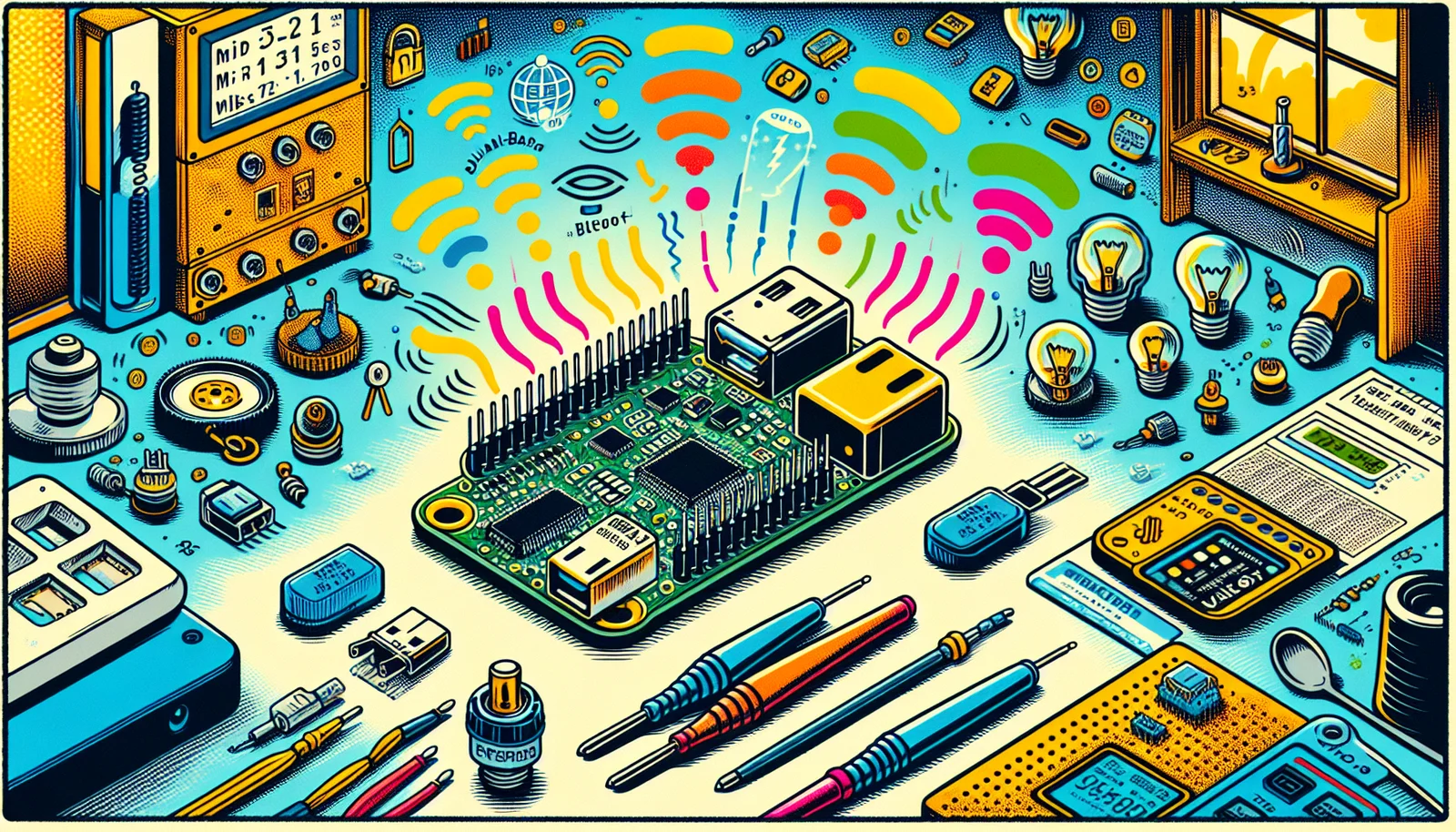
The ESP32-C5 Mini Squeezes Wi-Fi 6, Bluetooth, and 14 GPIOs Into a USB-C Stick
A new ESP32-C5 Mini development board lands April 28, 2026 with dual-band Wi-Fi 6, Bluetooth 5 LE, an 802.15.4 radio for Thread and Matter, and 14 GPIOs in a tiny USB-C form factor.

A Tiny USB-C Board Built for the Wi-Fi 6 IoT Era
CNX Software flagged a new ESP32-C5 Mini development board on April 28, 2026 — a tiny USB-C-form-factor IoT board built around Espressif's ESP32-C5 system-on-chip with dual-band Wi-Fi 6, Bluetooth 5.x LE, and an 802.15.4 radio for Zigbee, Thread, and Matter. For makers, smart-home tinkerers, and embedded developers who have been waiting for an ESP32 board that ships with the new Wi-Fi 6 radio in a footprint that fits anywhere, this is the cleanest current option in that price class.
The board has two 9-pin headers exposing up to 14 GPIO pins, which is enough capacity for the kind of mixed-signal sensor projects that ESP32 boards have traditionally anchored — temperature and humidity sensors, motion detectors, small displays, controllable LEDs, and the various I2C and SPI peripherals that hobbyist projects routinely wire up. The USB-C connector handles power and programming in a single cable, which keeps the project bring-up workflow simple.
What the ESP32-C5 SoC Brings to IoT Projects
The ESP32-C5 is Espressif's first dual-band Wi-Fi 6 capable chip, supporting both 2.4 GHz and 5 GHz bands. That is a meaningful upgrade for hobbyist IoT projects that have historically been constrained to the increasingly congested 2.4 GHz band. A smart-home device that joins the 5 GHz band gets meaningfully better latency, lower interference from microwaves and Bluetooth beacons, and more reliable connectivity in apartment-density Wi-Fi environments.
The 802.15.4 radio is the second piece of the puzzle. With Thread and Matter both maturing as the dominant smart-home protocols, having an SoC that natively speaks 802.15.4 is what makes a development board genuinely future-proof for smart-home builds. A single ESP32-C5 Mini can act as a Wi-Fi-connected device, a Thread border router endpoint, or a Zigbee node, depending on how the firmware is configured.
For Bluetooth-dependent projects, the Bluetooth 5.x LE radio rounds out the wireless stack. That is the same Bluetooth profile that supports modern BLE peripherals like fitness sensors, keyboards, mice, and Bluetooth-LE-based mesh devices. The combination of Wi-Fi 6, Thread/Matter, and BLE in a single SoC means a single ESP32-C5 Mini can replace what previously required multiple radios.
Form Factor and Pinout Details
The ESP32-C5 Mini ships in a tiny USB-C form factor that puts the SoC, the antenna, and the board-level peripherals into a footprint that fits inside small enclosures. Two 9-pin headers expose up to 14 GPIOs, which is enough for typical hobbyist sensor and actuator wiring without forcing project designers to switch to a larger ESP32 development board.
The USB-C connector handles both power and serial programming. Hobbyists working on ESP32 projects will find the workflow familiar — flash firmware over USB, monitor serial output, iterate. The board is designed for the same bring-up loop that has made ESP32 the dominant maker microcontroller platform.
Why Wi-Fi 6 Matters for Maker Projects
The Wi-Fi 6 radio is the headline upgrade. For most hobbyist projects, the practical Wi-Fi 6 wins are not the peak throughput numbers — those rarely matter for sensor projects that send a few hundred bytes per minute — but the lower latency, better airtime efficiency, and cleaner spectrum on the 5 GHz band.
Smart-home devices that join modern Wi-Fi 6 mesh networks get faster connectivity handoffs, more reliable joining, and better power profile via Target Wake Time scheduling. For battery-powered IoT projects specifically, Wi-Fi 6's TWT support is the most meaningful battery-life improvement in years — devices can negotiate scheduled wake intervals with the access point and sleep deeply between them.
Comparison to Other ESP32 Development Boards
The ESP32-C5 Mini is not a replacement for higher-end ESP32 boards in every project. Projects that need the SoC's camera or display peripherals are still better served by ESP32-S3 or ESP32-P4 boards. Projects that need more GPIO than 14 are better served by larger development boards like the official Espressif ESP32-C5-DevKitC.
What the ESP32-C5 Mini does best is the portable, embeddable, single-cable IoT project. A Wi-Fi 6 Matter-capable smart-home sensor, a Thread border router endpoint, a wearable BLE sensor, or any project that benefits from a tiny footprint plus modern wireless connectivity is the natural home for this board.
A Waveshare ESP32-C5-WIFI6-KIT also landed alongside the ESP32-C5 Mini, offering a wider range of PSRAM and flash configuration options plus onboard or external antenna selection. For projects that need specific flash sizes or need to drive an external antenna, the Waveshare kit is the alternative form factor in the same Wi-Fi 6 SoC family.
What This Adds to the Single Board Computer and Microcontroller Maker Stack
For makers building compact IoT projects in spring 2026, the ESP32-C5 Mini fills a specific gap that the ESP32 ecosystem had not previously addressed cleanly — a tiny, USB-C-native, dual-band Wi-Fi 6 board with 802.15.4 support and enough GPIO for typical sensor projects. Smart-home enthusiasts looking ahead to Matter-based device builds, embedded developers who want a future-proof microcontroller for their next project, and hobbyists who simply want a clean, fast IoT bring-up board all benefit from this addition.
The maker microcontroller world tends to move slowly between major SoC generations, and Wi-Fi 6 has been the thing the ESP32 lineup needed to stay current with the broader smart-home and IoT ecosystem. The ESP32-C5 Mini is the most accessible package for that capability to date.
Sources: CNX Software (April 28, 2026), Espressif Systems Documentation (April 2026), Waveshare ESP32-C5-WIFI6-KIT Listing (April 2026)
More Mini Computers Stories
MaTouch ESP32-S3 E Ink Board: A $60 Voice-Ready Dashboard
Makerfabs' MaTouch ESP32-S3 pairs a 7.5-inch four-color E Ink screen with a four-mic array for $59.80. Here are the specs and what you can build.

ASRock NUC 300 Mini PCs: Wildcat Lake With Dual 2.5GbE
ASRock Industrial's NUC 300 series brings Intel Core 5 320 and Core 3 304 to mini PCs and boards with up to 64GB of DDR5-6400 memory and dual 2.5GbE.

DGX Spark 64GB: Who NVIDIA's $4,999 Local AI Box Is For
NVIDIA's DGX Spark 64GB starts at $4,999 on Oct 23 and runs models up to 100B parameters. Here is who the local AI box suits and how clustering works.