Druva AI Resilience Adds Backup for Claude Code Work
Druva launched AI Resilience on July 21, adding backup, rollback, and governance for Claude Code projects and Microsoft Copilot activity logs.

Backup Finally Catches Up With AI-Assisted Work
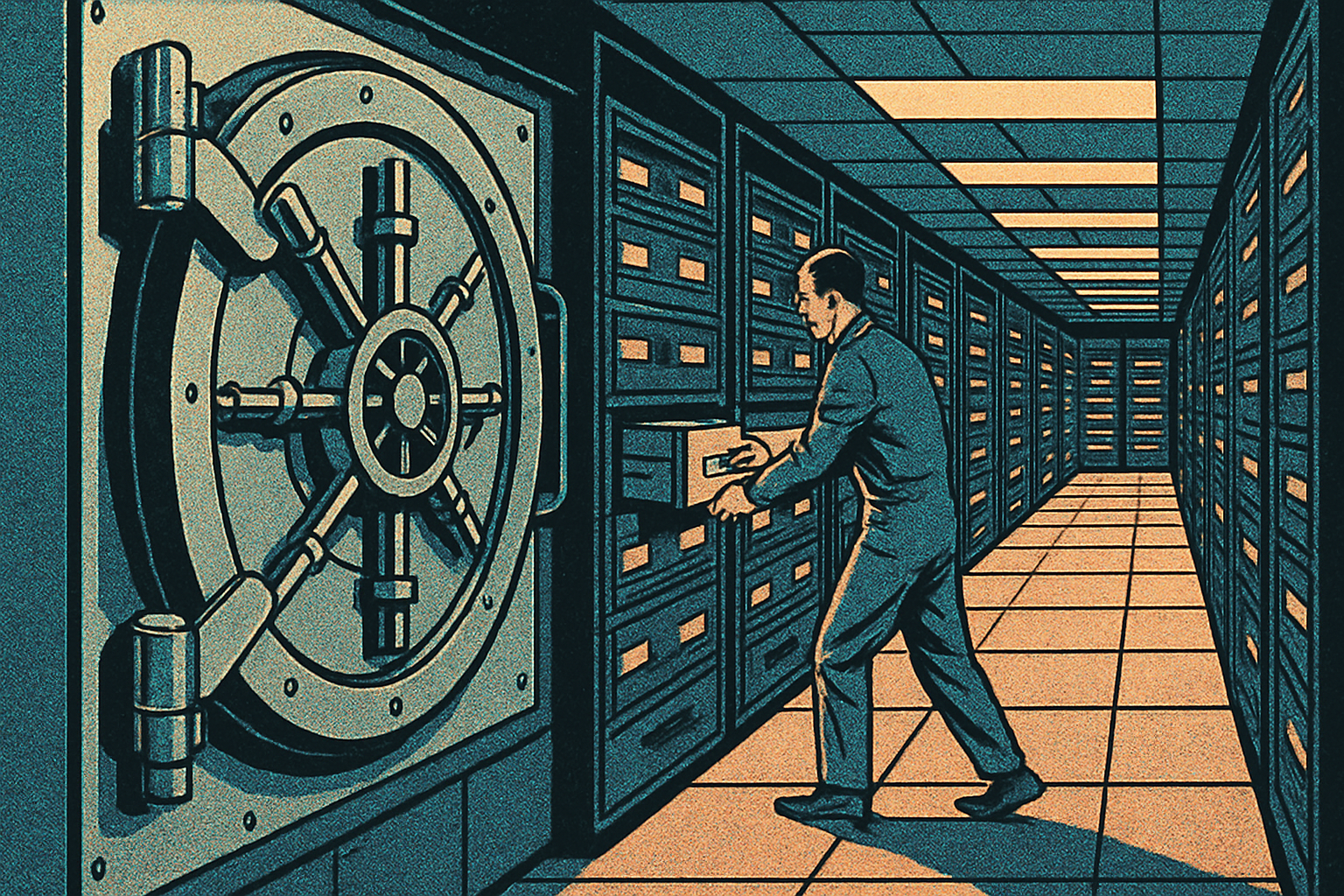
Druva launched Druva AI Resilience on July 21, 2026, and it addresses a gap most security teams have noticed but few have had a product for: the work your organization does with AI assistants largely does not exist in your backup estate. Prompts, conversation histories, generated artifacts, and the project context an agent accumulates all live in places traditional backup was never pointed at.
That is a governance problem before it is a disaster-recovery problem, and it is worth walking through carefully.
- Launched July 21, 2026, with capabilities in general or limited availability
- Claude Code protection — preserves project state, conversation history, code artifacts, and workflow context with granular rollback
- Microsoft Copilot protection — captures prompts, responses, and generated files as an independent record supporting legal hold and eDiscovery
- Druva MCP plus a new Dru SRE Agent for continuous backup reliability
Why Does AI Work Need Its Own Backup Story?
Think about where the value actually accumulates when a developer works with a coding agent over several days. The committed code is in Git — that part is fine. But the reasoning that produced it, the constraints that were established, the approaches that were tried and rejected, and the accumulated project context are not in Git. They are in the assistant's session state.
Lose that and you have not lost code. You have lost the institutional memory of *why* the code looks the way it does. Anyone who has inherited a codebase without its decision history knows exactly how expensive that is.
The Rollback Case Is the Sharper One
Druva's Claude Code capability offers granular rollback for when AI-assisted changes create risk. This is the more immediate value. An agent working across a repository can touch many files in one pass. Most of those changes are usually correct. When one is not, the useful recovery is not "restore yesterday's snapshot and lose the good work too" — it is targeted reversal of a specific change while everything else stands.
That is a meaningfully different recovery model than file-level backup provides, and it is the right shape for how agentic development actually goes wrong.
The Copilot Side Is a Compliance Story
For Microsoft Copilot, Druva captures prompts, responses, conversations, generated files, and metadata as an independent record — retainable, searchable, and recoverable, with support for legal holds, compliance, and eDiscovery.
The word carrying the weight is *independent*. If your only record of AI interactions lives inside the AI vendor's platform, your retention policy is their retention policy and your eDiscovery capability is bounded by their export tooling. For a regulated organization, that is not a tenable position. An independent copy under your own retention controls is simply how every other business record is handled, and there is no principled reason AI interactions should be the exception.
What Regulated Teams Should Take From This
If your organization is subject to legal hold obligations, the practical question is already live: when litigation hold attaches, does it cover employees' AI assistant conversations? In most jurisdictions the answer is that business records are business records regardless of the tool that produced them. Having a capture mechanism is what makes compliance with that obligation possible rather than aspirational.
Druva MCP: Resilience Data Inside the Assistant
The fourth piece is Druva MCP, which exposes Druva's insights and workflows to MCP-compatible assistants — Microsoft Copilot, Claude, Cursor — while preserving enterprise authentication, role-based access control, and governance policy.
This is the correct way to build an MCP integration, and it is worth calling out because not everyone does it this way. The failure mode with MCP servers is bypassing the authorization model of the underlying system, so that anything the assistant can reach, any user of the assistant can reach. Keeping RBAC enforcement in the server means an analyst querying backup status through Claude sees exactly what they would see in the console — no more. Same identity, same permissions, different interface.
We covered the broader design principles here in AI Agent Sandbox Design: 4 Lessons From New Research, and the RBAC-preservation pattern is the one that generalizes furthest.
The Dru SRE Agent
Rounding out the launch is a DruAI agent that turns backup monitoring into continuous reliability work — identifying issues, explaining root causes, prioritizing recommendations, and guiding resolution.
Backup monitoring is a well-chosen first target for agentic automation. It generates steady low-severity alerts, the diagnostic paths are well understood, and the failure mode of a wrong recommendation is mild because a human still executes the fix. That is a sensible place to start rather than pointing an agent at incident response on day one.
Practical Takeaways
Even if you never buy this product, the launch clarifies three questions worth answering internally:
- Where does your AI-assisted work actually live, and is any of it in your backup scope?
- If a legal hold attached tomorrow, could you produce AI assistant conversations?
- Can you reverse one bad agent change without discarding a day of good ones?
Those are answerable this week with no procurement involved, and the answers tend to be clarifying. More on securing AI systems in our AI security coverage.
Sources: Help Net Security — July 21, 2026; Help Net Security infosec products roundup — July 24, 2026; Blocks & Files — July 21, 2026.
More Ai Security Stories

OpenAI and AARP Help Older Adults Spot Online Scams
More than 1,000 older adults across 10 US cities joined free AI Skills Jam workshops on using ChatGPT safely and recognising attempted scams.
Postman Passport Gives AI Agents Keyless API Access
Passport hands agents a cryptographic reference instead of a real API key, keeping credentials inside your network and revocable in seconds.
Zanzibar-Style Authorization Explained for Developers
A practical guide to relationship-based access control: how Google Zanzibar works, when ReBAC beats roles, and what open-source options exist in 2026.