
DRAM Surge Pushes Raspberry Pi and Mini PC Prices to Parity — Used Hardware Becomes 2026's Best Homelab Strategy
A 171% DRAM price spike erases the Pi's cost advantage over Intel N100 mini PCs, with Jeff Geerling and homelab experts recommending used corporate hardware as the smart play.

The Price Gap Has Vanished
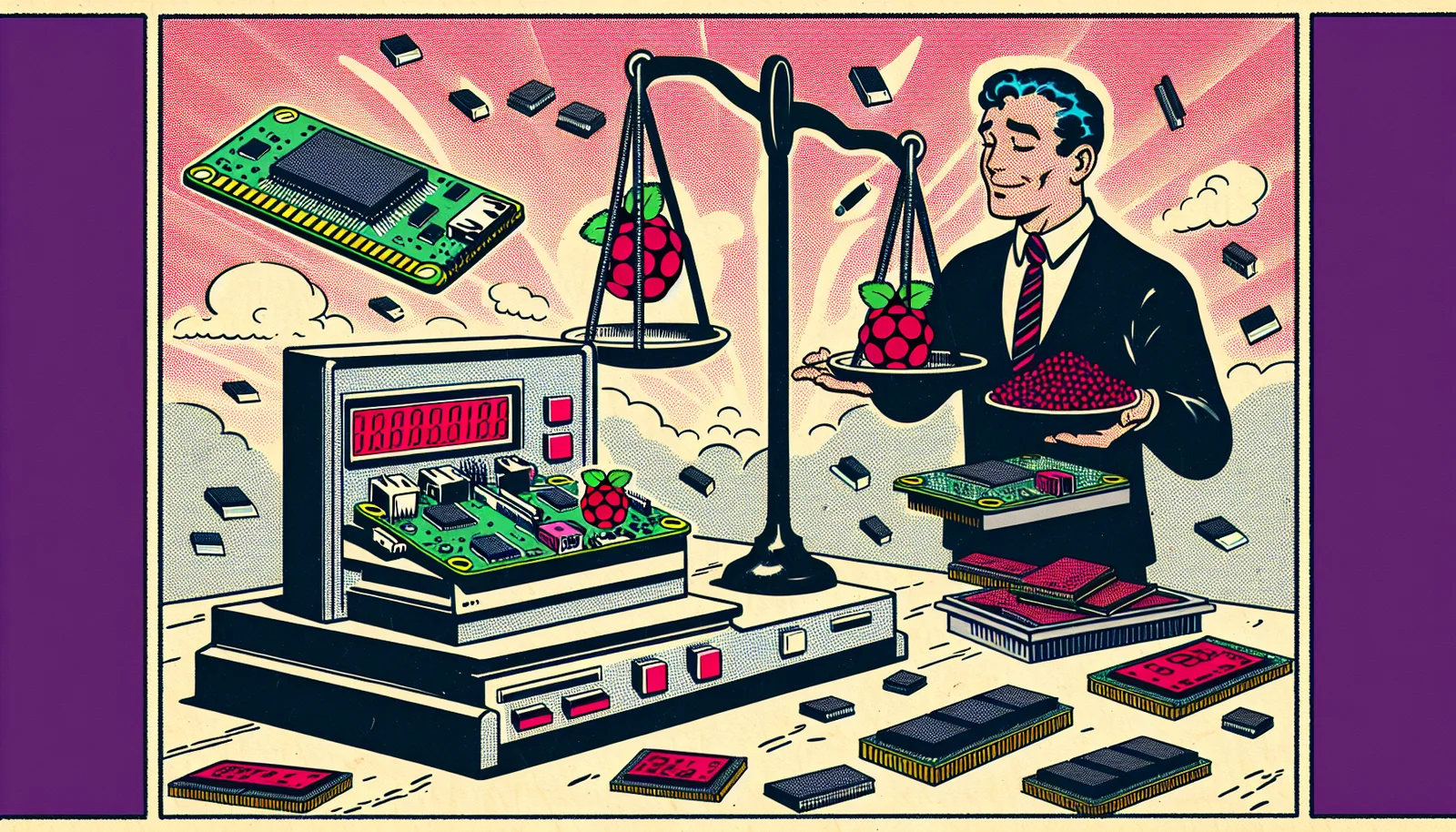
If you have been planning a homelab build in 2026, you have probably noticed something strange: a fully equipped Raspberry Pi 5 now costs about the same as an Intel N100 mini PC with similar specs. According to analysis by Jeff Geerling and Tom's Hardware, a Raspberry Pi 5 kit with 16 GB of RAM, a 512 GB SSD, power supply, case, and RTC battery has risen from approximately $208 in January 2025 to $246.95 in January 2026. Meanwhile, a GMKTec mini PC with comparable specifications — 16 GB RAM, 512 GB NVMe SSD — has climbed from $156-159 to $246-259 over the same period.
The culprit is memory. DRAM prices have surged 171% in twelve months, driven by insatiable AI data center demand that has absorbed global memory production capacity. Goldman Sachs research suggests conventional DRAM prices could continue rising by double-digit percentages quarter-over-quarter throughout 2026, with normalization unlikely before 2027 or 2028 when new production capacity comes online.
Why AI Demand Is Hitting Your Homelab Wallet
The connection between AI training clusters and your Raspberry Pi's price tag is direct. Every AI data center that NVIDIA, Microsoft, and Google builds requires enormous quantities of high-bandwidth memory and server DRAM — the same underlying semiconductor fabrication that produces the memory chips in consumer devices. With AI infrastructure spending accelerating and memory fabs running at maximum capacity, consumer memory has become a lower-priority allocation for manufacturers chasing higher-margin AI contracts.
Raspberry Pi Ltd. acknowledged the pressure directly, announcing memory-driven price increases and introducing a 1 GB Raspberry Pi 5 variant at $45 to give budget-conscious makers an entry point. But for homelab builders who need 8-16 GB of RAM for running containers, media servers, or self-hosted applications, the price advantage that once made the Pi the default choice has largely evaporated.
The Used Hardware Play
The emerging consensus among homelab enthusiasts is that 2026 is the year of used hardware. Jeff Geerling's latest analysis concludes that repurposing used corporate hardware will be the defining homelab trend of the year. Old corporate mini PCs — Dell OptiPlex Micros, Lenovo ThinkCentre Tinys, HP EliteDesk Minis — often ship with 16-32 GB of DDR4 RAM and NVMe storage already installed, and can be found on the secondhand market for $100-150. That is significantly less than building a comparable new system from any platform.
For homelab builders, the calculus has shifted. The Pi still wins on power efficiency — drawing 5-10 watts versus 25-35 for an Intel mini PC — making it the right choice for always-on, low-power applications. But for general-purpose homelab workloads where performance matters more than power draw, a used corporate mini PC now offers better value per dollar than any new hardware on the market.
Sources: Tom's Hardware (March 2026), Jeff Geerling (March 2026), Raspberry Pi Official Blog (March 2026), Goldman Sachs Research (2026)
More Mini Computers Stories

Raspberry Pi Net Zero: How Pi Towers Swapped Gas for Pis
Raspberry Pi replaced a £150,000 building system with a £7,800 Pi-based one at Pi Towers, cut gas entirely in June 2026, and targets net zero in 2027.

Q8botOne Robot Dog: A Palm-Sized Open ESP32-C3 Quadruped
Q8botOne is a palm-sized open-source robot dog with an ESP32-C3 brain and 8 DYNAMIXEL actuators, from $199 as a kit or $599 assembled on Crowd Supply.
Surface RTX Spark Dev Box: Is a $5,999 AI Box Worth It?
Microsoft opened Surface RTX Spark Dev Box pre-orders at $5,999: 128GB unified memory, up to 1 petaflop FP4, and support for 120B-plus parameter models.