
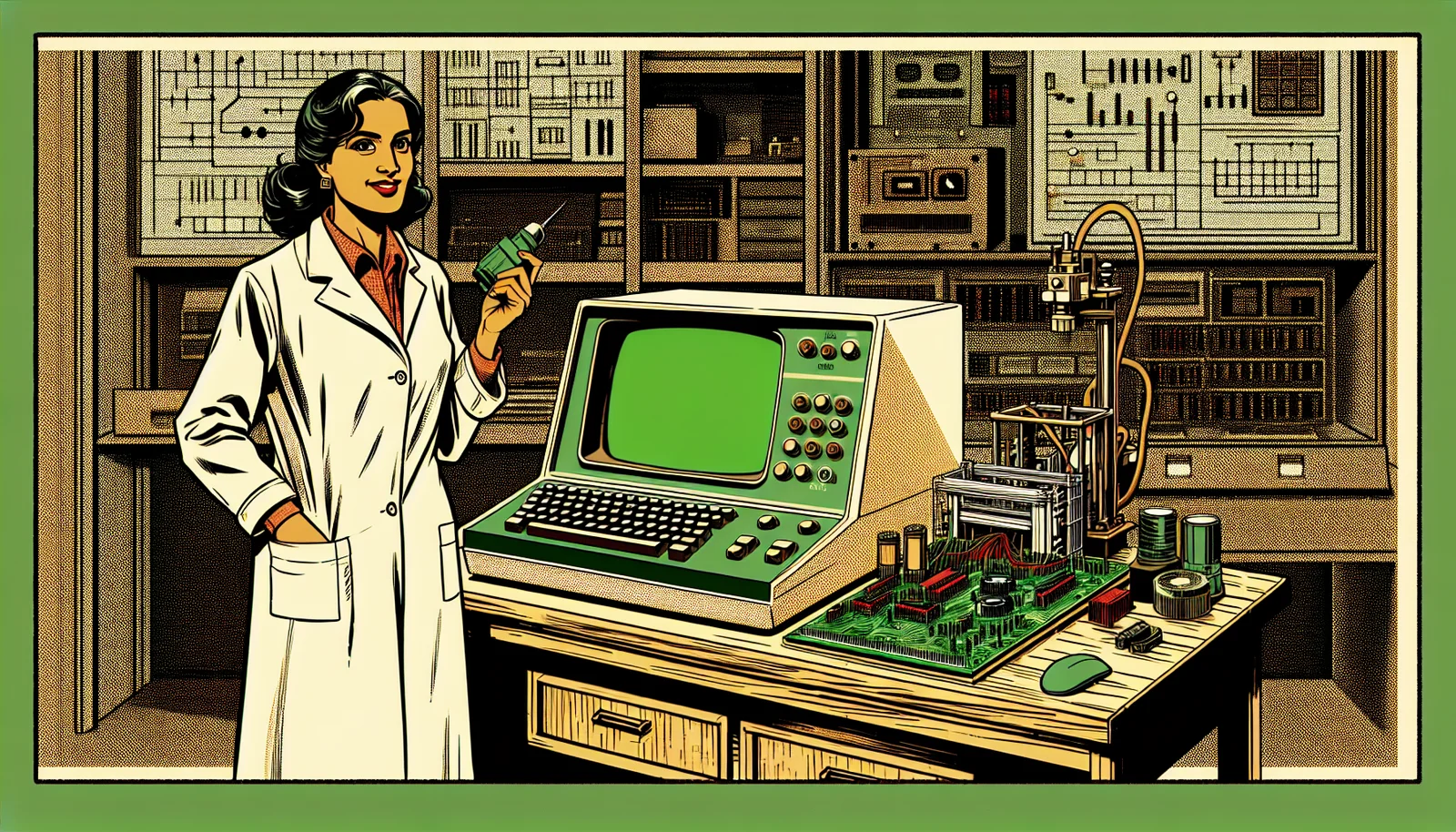
A Maker Built a Stunning 1970s Terminal Replica With a Raspberry Pi and a 3D Printer
David Green's ADM-3A terminal replica pairs a 3D-printed vintage enclosure with a Raspberry Pi 3 to recreate the dawn of interactive computing for under $100.

Some projects exist at the perfect intersection of engineering skill and historical appreciation. David Green's replica of a 1970s Lear Siegler ADM-3A computer terminal, published on Hackaday on March 1, is one of those projects — a fully functional recreation of one of computing's most iconic machines, built with modern maker tools and a Raspberry Pi 3.
The Build That Bridges Eras
Green was inspired by seeing an original ADM-3A at a local computer festival. Rather than hunting for increasingly rare vintage hardware, he decided to build his own. The entire enclosure was 3D-printed and finished to achieve the authentic look of 1970s office equipment — the beige plastic, the angular design language, the utilitarian aesthetic that defined the era.
Inside the period-accurate shell, a flat LCD panel replaces the original CRT display, and a Raspberry Pi 3 provides the computational core. The system runs the i3 window manager for an appropriately minimal interface feel and can boot into emulators for older computing systems. The result is a machine that looks like it belongs in a 1975 computer lab but runs on hardware you can buy for thirty-five dollars.
Why the ADM-3A Matters
The Lear Siegler ADM-3A holds a special place in computing history that extends beyond nostalgia. It was the terminal that Bill Joy used when developing the vi text editor at UC Berkeley. The ADM-3A's keyboard layout — with its arrow keys printed on the H, J, K, and L keys — is the reason vi and Vim use those keys for navigation to this day. Every developer who uses Vim-style keybindings is using a convention that traces directly back to this terminal.
Recreating the ADM-3A is not just building a pretty box. It is preserving a piece of the design history that still shapes how millions of developers interact with their computers every day.
The Maker Skills on Display
The project showcases the remarkable capabilities available to modern makers. 3D printing enables enclosure fabrication that would have required expensive tooling a decade ago. Single board computers like the Raspberry Pi provide computing power that far exceeds the original hardware at a fraction of the cost and size. Open-source emulation software bridges the gap between vintage and modern.
Green's finishing work deserves particular mention. Achieving the authentic look of vintage electronics with 3D-printed parts requires careful attention to surface finish, color matching, and proportional accuracy. The published photos show a replica that could fool casual observers into thinking it is an original unit.
Accessible Computing History
The total build cost comes in under one hundred dollars, making this an accessible project for educators, museums, hackerspaces, and individual enthusiasts. For computer science programs looking to give students tangible connections to the history of their field, a functional ADM-3A replica provides an experience that no textbook or lecture can match.
The keyboard goes clack. The cursor blinks. And for a moment, you are sitting where the foundations of modern computing were laid.
Sources: Hackaday, March 1, 2026
More Mini Computers Stories

Raspberry Pi Net Zero: How Pi Towers Swapped Gas for Pis
Raspberry Pi replaced a £150,000 building system with a £7,800 Pi-based one at Pi Towers, cut gas entirely in June 2026, and targets net zero in 2027.

Q8botOne Robot Dog: A Palm-Sized Open ESP32-C3 Quadruped
Q8botOne is a palm-sized open-source robot dog with an ESP32-C3 brain and 8 DYNAMIXEL actuators, from $199 as a kit or $599 assembled on Crowd Supply.
Surface RTX Spark Dev Box: Is a $5,999 AI Box Worth It?
Microsoft opened Surface RTX Spark Dev Box pre-orders at $5,999: 128GB unified memory, up to 1 petaflop FP4, and support for 120B-plus parameter models.