
D-Robotics RDK S100P Packs 128 TOPS Into a Robot Kit
The RDK S100P pairs a 128 TOPS BPU with six Cortex-A78AE cores and 24GB LPDDR5 for $899, aiming squarely at the Jetson Orin NX 16GB bracket.

A Real Alternative in the 100-TOPS Bracket
D-Robotics has put the RDK S100P on sale, and the specification sheet reads like it was drafted with a Jetson Orin NX 16GB sitting open in another tab. The headline number is 128 TOPS of INT8 inference from D-Robotics' own Nash-architecture BPU, and the supporting hardware is unusually generous for the price.
The kit is listed at $899 from DFRobot and $999.99 from Waveshare. That is real money for a development kit, and it is also the point — this is a class of hardware where the alternatives cost about the same and there have not been many alternatives.
- 128 TOPS INT8 from the Nash BPU, alongside a Mali-G78AE GPU rated at 100 GFLOPS
- Six Arm Cortex-A78AE cores at 2.0 GHz for applications, plus four Cortex-R52+ cores at 1.2 GHz for real-time control
- 24GB LPDDR5 on a 96-bit bus at up to 6400 Mbps, with 64GB eMMC and an M.2 NVMe socket
- $899 from DFRobot, $999.99 from Waveshare
Why the Dual-Brain Layout Matters for Robots
The detail worth dwelling on is not the TOPS figure — it is the split between the A78AE application cluster and the R52+ real-time cluster. Those two core families exist for genuinely different jobs. The A78AE cores run Linux, the perception stack, the planning code. The R52+ cores run the loop that has to close in a fixed number of microseconds every single time or the robot falls over.
D-Robotics documents the R52+ block as configurable for safety work: two cores in lockstep, the other two in split-lock. That is the arrangement you want when a control loop failure has physical consequences, and it is the reason this board is aimed at robots rather than at generic edge inference.
The AE suffix on both the CPU and GPU means automotive-enhanced parts — silicon designed with fault detection built in. Seeing that on a $899 developer kit rather than a five-figure automotive platform is the genuinely new thing here.
What Do You Get for the Money?
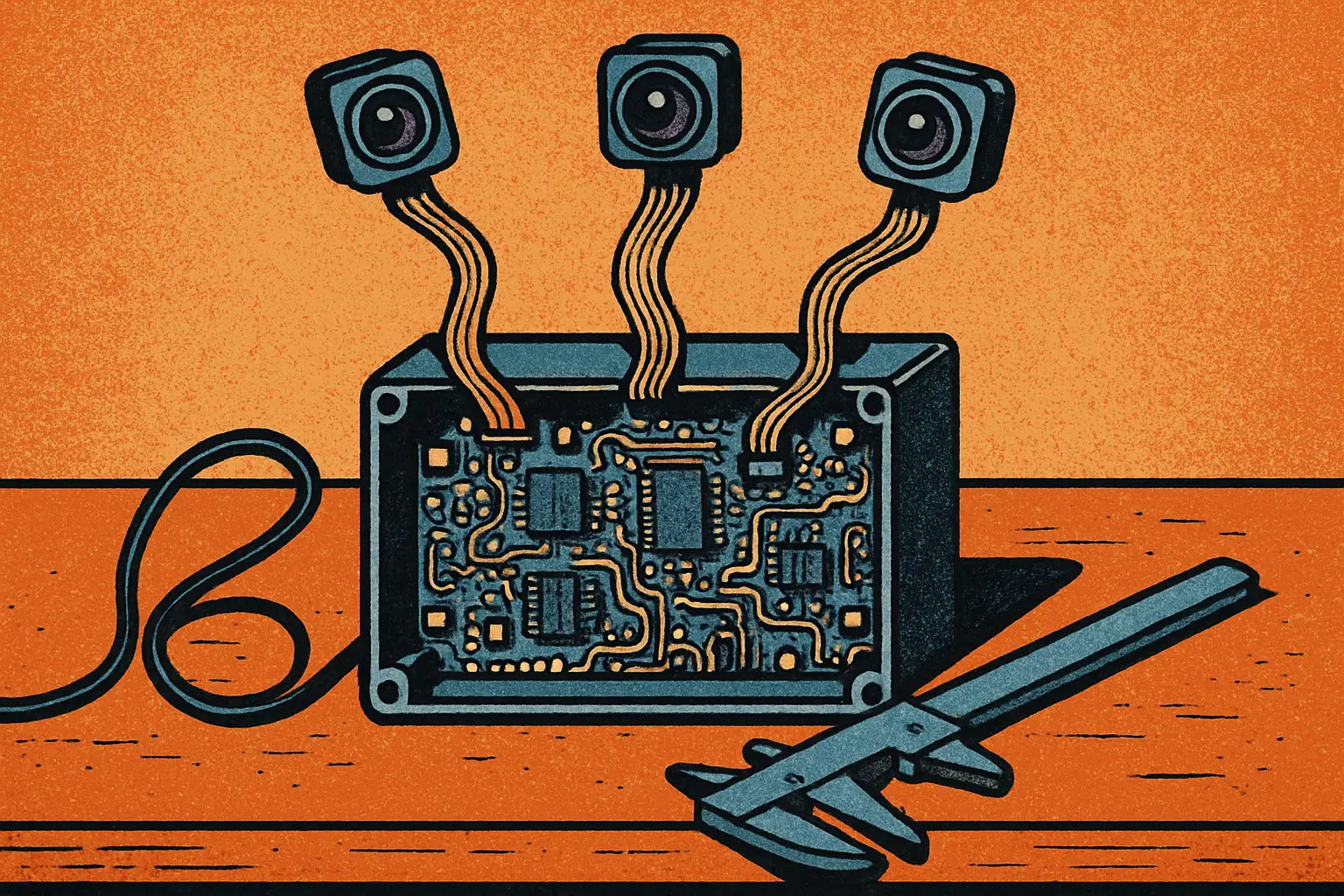
Connectivity is not an afterthought. There are two gigabit Ethernet ports, four USB 3.0 Type-A ports, a dual-role USB 2.0 Type-C port, and three four-lane MIPI CSI-2 camera interfaces — enough for a proper multi-camera perception rig without a breakout board. HDMI 1.4 drives a display to 2560x1440 at 60Hz, and an M.2 E-key slot takes a Wi-Fi and Bluetooth card.
The whole thing fits in a 121 x 120 x 51 mm case and runs on 12-20V DC, shipping with a 90W adapter against a 150W ceiling. Operating range is 0 to 45 degrees Celsius, which is the one spec that marks it as a lab and indoor-robot part rather than an outdoor deployment part.
Software is where these boards usually live or die. D-Robotics ships RDK OS, an Ubuntu 22.04 desktop image, with TogetheROS.Bot layered on top of ROS 2 Humble. Anyone who has spent a weekend fighting a vendor's fork of a robotics stack will recognise how much that matters.
How Does It Compare to a Jetson?
Honestly: on paper, favourably, and on ecosystem, not yet. Nvidia's advantage in this bracket has never been raw throughput — it has been CUDA, TensorRT, and a decade of sample code that already works. D-Robotics is competing on the axis it can move, which is hardware value, and 24GB of LPDDR5 next to a 16GB competitor is a meaningful gap for anyone running vision models with large intermediate buffers.
For context on the bracket, we recently covered the Jetson Orin Nano 2 hitting 78 TOPS on 40% less power, and the $399 Microduck open source robot at the hobbyist end of the same trend. The RDK S100P sits above both, and it is a welcome sign that the mini computers and edge AI market now has more than one serious answer at every price point.
Sources: CNX Software — August 31, 2026; D-Robotics RDK documentation — August 2026; Waveshare product listing — August 2026.
More Mini Computers Stories

Romu RP2354A Board: A $40 Raspberry Pi Chip in a USB Stick
Romu puts the Raspberry Pi RP2354A into a 15.5 x 12 mm USB stick for $40, running MicroPython for security keys, macro pads and MIDI controllers.

VIEWE ESP32-S31 Display: $39 Wi-Fi 6 Touch Panel for Makers
VIEWE's $38.99 4.3-inch touch display is one of the first ESP32-S31 boards, adding Wi-Fi 6, Thread, RS485 and CAN for smart home and industrial panels.

Wireless-Tag WT32P4C5-43S: A $32 ESP32-P4 Touch Display
The Wireless-Tag WT32P4C5-43S pairs an ESP32-P4 with an ESP32-C5 behind a 4.3-inch 800 x 480 touchscreen, adding dual-band Wi-Fi 6 and Thread for $32.