
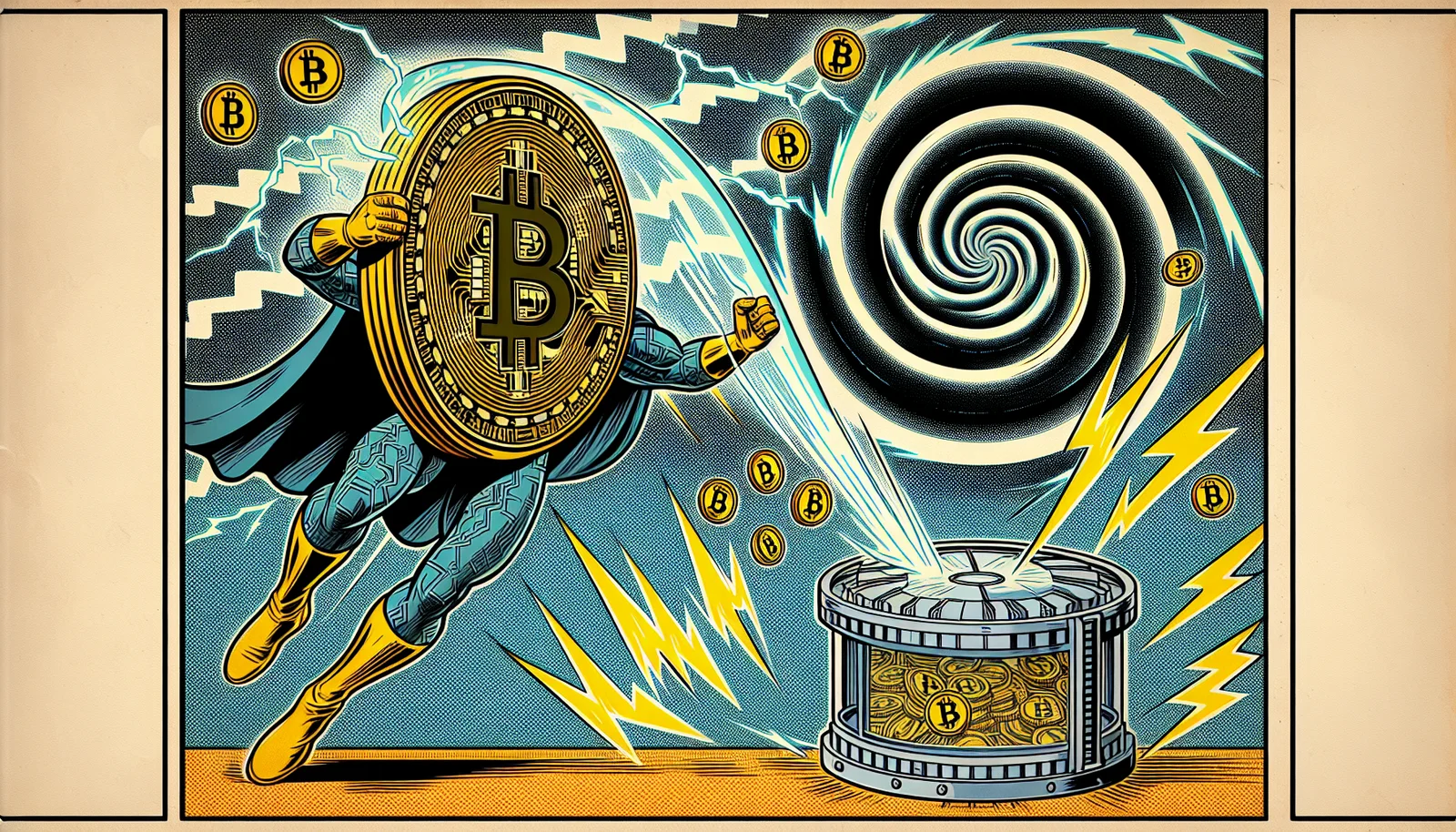
Bitcoin Gets Its First Working Quantum-Defense Wallet Rescue Prototype
Lightning Labs CTO Olaoluwa Osuntokun released a working zk-STARK prototype that proves Bitcoin wallet ownership without exposing private keys — turning years of quantum-defense theory into runnable code.

From Theory to Working Code: Bitcoin's Quantum Defense Gets Real
The Bitcoin developer community has been discussing quantum resistance for years. On April 8, 2026, Lightning Labs CTO Olaoluwa "Roasbeef" Osuntokun moved that conversation from theoretical to practical. He posted a working prototype to the Bitcoin developers' mailing list and on X: a zk-STARK tool that lets owners of BIP-86 Taproot wallets prove ownership and spend funds without exposing their private keys — even in the event that Bitcoin ever activates an emergency quantum-defense soft fork.
CoinDesk covered the release on April 9 as "Bitcoin's first working prototype of a quantum-resistant wallet rescue tool." That description is technically accurate and somewhat undersells the elegance of what was built.
The Problem This Solves
Bitcoin's current security model relies on elliptic curve cryptography — specifically secp256k1 and Taproot key-path spends. Sufficiently advanced quantum computers running Shor's algorithm could theoretically derive private keys from public keys. The timeline for quantum computers reaching that capability remains genuinely uncertain. But defensive planning for a network as large and as slow-to-change as Bitcoin needs to begin well in advance of when the threat becomes concrete — years, not months.
The specific scenario this prototype addresses: if Bitcoin's developers ever activate an emergency soft fork disabling vulnerable key-path spends (blocking the spending path quantum computers could attack), current wallet holders would need an alternative way to prove ownership and move funds. Without it, wallets could be stranded.
How zk-STARKs Provide the Answer
Osuntokun's prototype uses a zero-knowledge STARK proof to let users prove that their Taproot output key was derived from their original BIP-32 seed phrase along the standard BIP-86 derivation path — without ever revealing the seed or private key. The proof mechanism uses only hash functions and Merkle trees. No elliptic curves. No discrete logarithms. This makes the rescue tool itself quantum-resistant — a critical property for a security tool designed to protect against quantum attacks.
The initial prototype generates a verifiable ownership proof in approximately 55 seconds on an Apple Silicon M4 Max. An optimized lighter variant brings that down to under three seconds. Both run on consumer hardware, which matters: a rescue mechanism that requires specialized infrastructure would leave ordinary Bitcoin holders behind.
Developer Community Response and What Comes Next
The response on the Bitcoin mailing list was broadly positive. Developers noted that moving from theoretical framework to benchmarked, runnable code is the critical step that gives Bitcoin improvement proposals the practical foundation needed to enter the activation consideration pipeline. A working prototype with competitive performance numbers is how quantum-defense proposals earn credibility in the Bitcoin developer community.
For long-term Bitcoin investors and holders, the directional signal is positive: Bitcoin's development ecosystem is actively building quantum-resistance tooling ahead of any immediate threat. The first generation of practical tools is functional, running on hardware you already own.
Sources: CoinDesk (April 9, 2026), CoinEdition (April 2026), CryptoTimes (April 10, 2026), TechNext24 (April 10, 2026)
More Crypto Stories
SEC Crypto Custody Proposal: What It Means for Advisers
The SEC proposed crypto custody rules on Oct 1 letting advisers and funds use state trust companies and self-custody. Public comments run for 60 days.

Evernorth XRPN Nasdaq Debut: Inside the 473M XRP Treasury
Evernorth won its SPAC vote and plans to list on Nasdaq as XRPN on October 8, holding about 473 million XRP backed by over $1 billion in funding.

Roughrider Coin: How 90+ North Dakota Banks Settle on Solana
Fiserv's digital asset platform is live with Roughrider Coin: a dollar-backed stablecoin linking 90+ North Dakota banks on Solana. Here is how it works.