
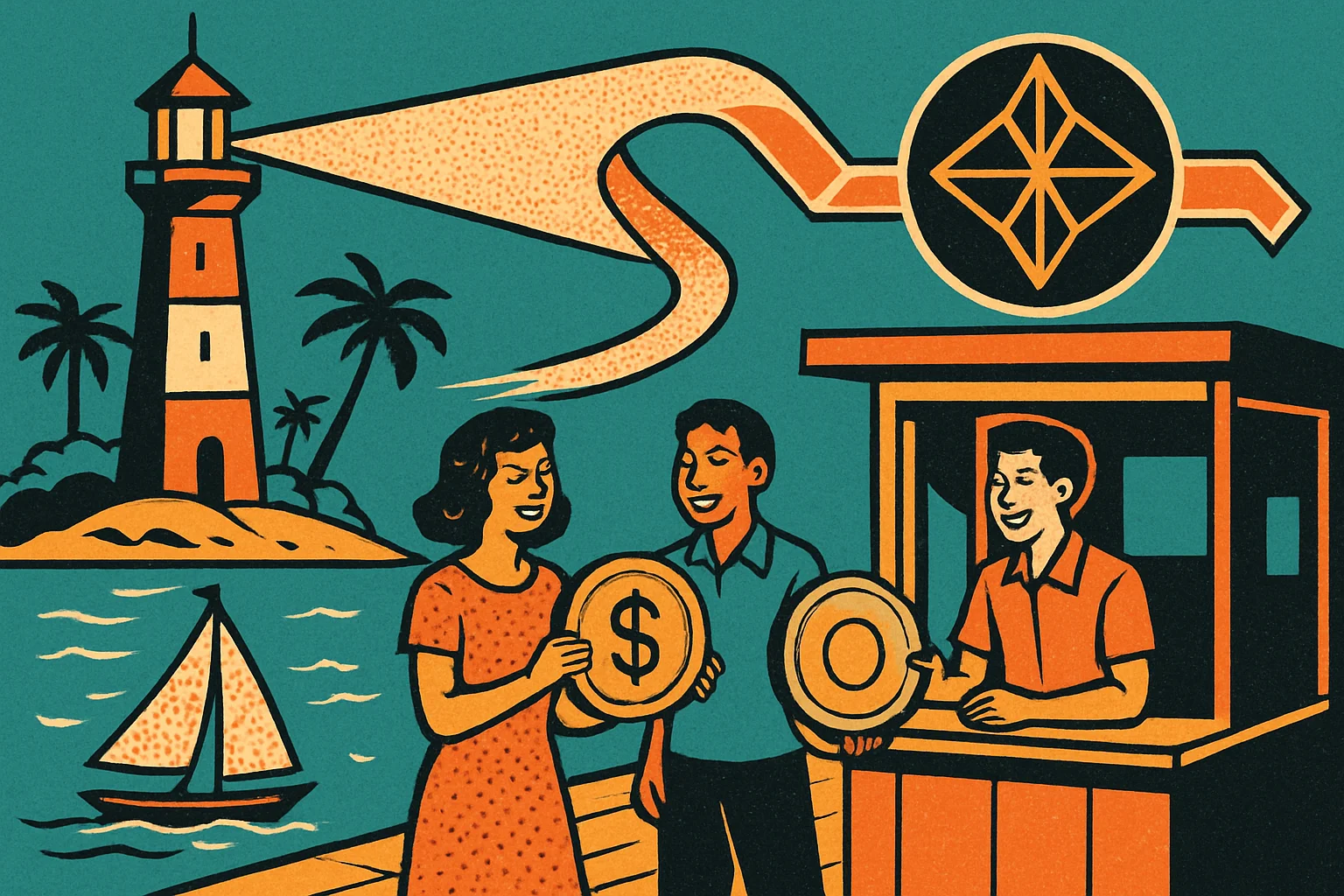
Bermuda Goes On-Chain — Stellar Foundation Partnership Aims to Make Bermuda the First Fully On-Chain Economy
Bermuda partnered with the Stellar Development Foundation on May 13, 2026 to move major payment and financial services onto the Stellar blockchain — aiming to become the world's first fully on-chain national economy.

A National Economy Moves to Stellar — And the Read for Crypto Is Substantial
The Government of Bermuda and the Stellar Development Foundation jointly announced on May 13, 2026 that Bermuda is moving major payment and financial services onto the Stellar blockchain network. The framing both parties used at the Bermuda Digital Finance Forum is precise: Bermuda is positioning itself to become the world's first fully on-chain national economy. Premier David Burt described the partnership as the next logical step beyond Bermuda's Digital Asset Business Act of 2018 — the regulatory framework that established Bermuda as one of the earliest and friendliest jurisdictions for digital asset businesses worldwide.
For everyone tracking how blockchain technology is graduating from speculative trading instrument into operational financial infrastructure, the Bermuda-Stellar partnership is exactly the kind of announcement that materially expands the conversation. This is a sovereign government committing to move real payment rails — wages, government fee collection, merchant payments, and tokenization integration — onto a public blockchain.
The Stellar Network Is the Right Substrate for National-Scale Payments
Stellar's design choices have always been oriented around cross-border payments, fast settlement, and low transaction fees — and those are exactly the properties a national-scale payment system needs. Stellar transactions confirm in seconds, fees stay measured in fractions of a cent, and the protocol's native asset issuance primitives make tokenization a first-class capability rather than a bolt-on layer.
Why Bermuda Is the Right First Mover
Bermuda's structural fit for an on-chain economy is unusually strong. The island already runs a forward-leaning regulatory environment under the Bermuda Monetary Authority, the population is small enough that nationwide digital literacy programs are practical, and the existing financial services industry is sophisticated enough to integrate tokenization tools without major retraining. Premier Burt's framing — that Bermuda's dependence on traditional payment networks contributed to high operational costs and slower economic progress — is the kind of clear policy rationale that makes a national-scale blockchain rollout feel inevitable rather than experimental.
The Implementation Plan Is Practical, Not Aspirational
The implementation framework Bermuda and Stellar described is structured around four concrete capability rollouts. First, government agencies will pilot stablecoin-based payments for routine flows like wage disbursement and fee collection. Second, regulated financial institutions will be able to integrate tokenization tools to bring traditional assets on-chain. Third, residents will participate in nationwide digital literacy programs to build the user-side foundation. Fourth, digital wallets will let residents receive wages, pay merchants, settle government fees, and hold digital assets — all on the same Stellar-based rails.
Stablecoin Payments Are the First Rail
The decision to start with stablecoin payments for government flows is structurally smart. Stablecoins are the part of the digital asset stack that consumers and businesses already understand, the user experience is functionally similar to a digital wallet, and the underlying settlement is fast enough that real-time wage disbursement becomes practical. That is the kind of high-frequency, lower-risk use case that lets a population build comfort with on-chain payments before more sophisticated tokenization workflows arrive.
What This Means for the Broader Stablecoin and Tokenization Trend
The Bermuda-Stellar partnership lands at a moment when stablecoin settlement and tokenization are reaching mainstream financial institutional adoption simultaneously. Visa has been expanding its stablecoin settlement pilot to nine blockchains. BlackRock has filed for tokenized money market funds explicitly designed to serve as stablecoin reserves. Mastercard and Rain are building stablecoin-backed cards for institutions. The Bermuda announcement is the first national-government-scale demonstration that the same infrastructure can support a full economy, not just an asset class.
A Long-Term Validation Signal for Stellar
For Stellar specifically, partnering with a national government to power the payment layer of an entire economy is the most material validation milestone the protocol has hit. It changes the conversation about Stellar from "the cross-border payments blockchain" to "the blockchain a sovereign nation chose to run its on-chain financial system on." That repositioning is durable — and it gives other governments evaluating their own blockchain strategy a concrete precedent to study.
The Broader Read for Crypto Markets
The bigger picture here is that the institutional and sovereign blockchain adoption curve is steepening. Tokenized US Treasuries on Ethereum recently hit a record $8 billion. Bitcoin has been holding above $80,000 since January. Spot Bitcoin and Ethereum ETF flows continue to grow. And now an entire nation is moving its payments and financial services onto a public blockchain. Each of these stories on its own is a meaningful data point. Together, they describe a market in which the question of whether blockchain technology will be load-bearing financial infrastructure has essentially been resolved — and the conversation is now entirely about pace, jurisdiction, and architecture.
Sources: Stellar Foundation press release (May 13, 2026); Hipther News (May 13, 2026); Bermuda Digital Finance Forum (May 13, 2026)
More Crypto Stories

Ethereum Glamsterdam on Sepolia: What 200M Gas Means Next
Ethereum's Glamsterdam upgrade is live on Sepolia with in-protocol PBS, parallel validation and a near-200M gas limit, over 3x mainnet's current 60M.

Samsung Wallet USDC: How 82M Galaxy Phones Will Send Money
Samsung Wallet will let US users send USDC across borders over Solana from late October 2026, reaching about 82 million Galaxy devices at launch.

How Stablecoins Work: Reserves, Redemption and Sending Money
How do stablecoins work? Our guide explains the 4 types, how USDC reserves and 1:1 redemption work, and how to send a stablecoin transfer abroad safely.