
Anthropic's New 'Dreaming' Feature Teaches Claude Agents to Learn From Their Own Sessions
At Code with Claude on May 6, 2026 Anthropic shipped Dreaming, Outcomes, and Multi-Agent Orchestration — turning Claude Managed Agents into systems that review their own runs and improve over time.

A Step Toward Agents That Actually Learn
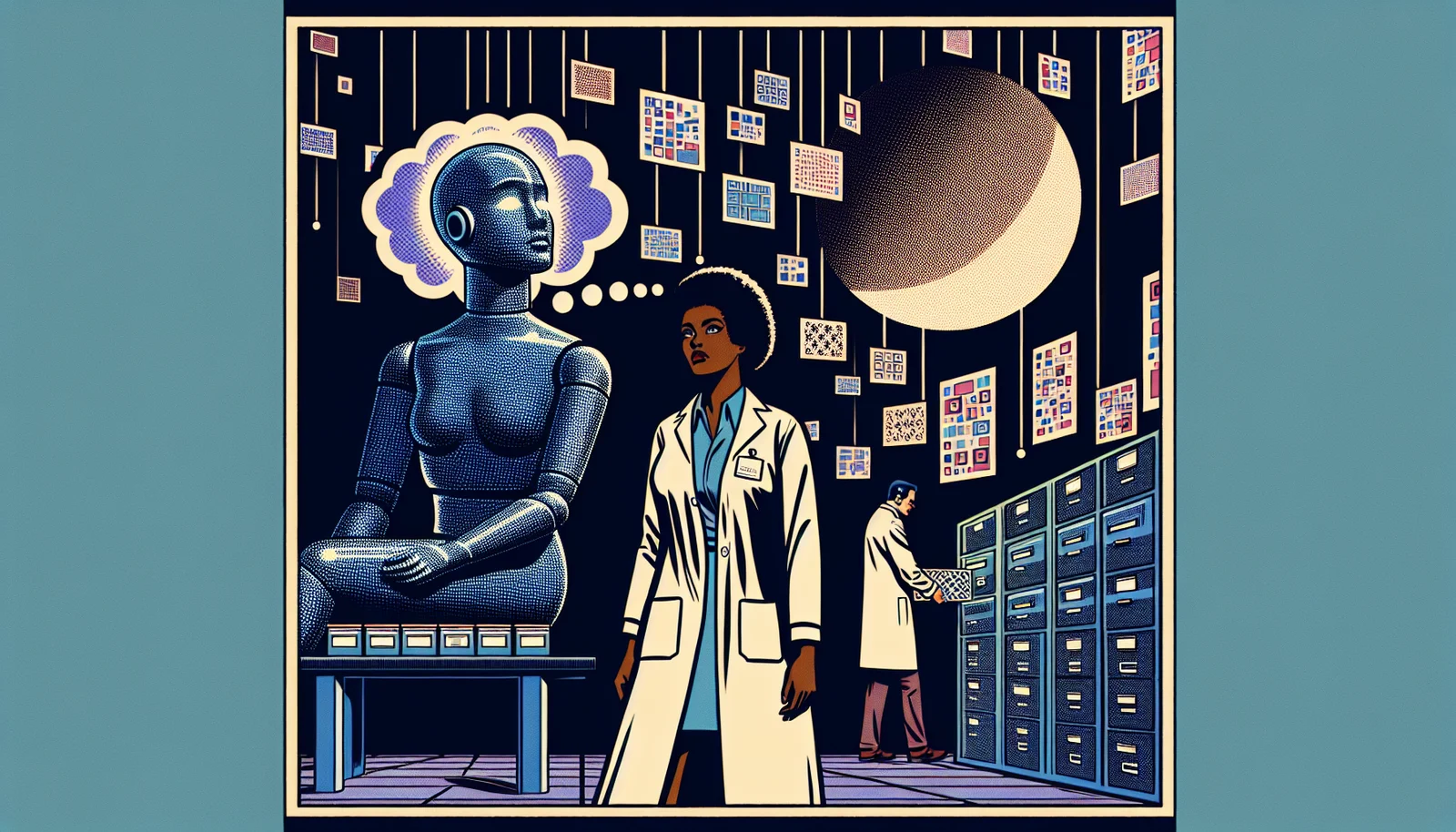
At its Code with Claude developer conference on May 6, 2026, Anthropic announced three substantial new capabilities for Claude Managed Agents: Dreaming, Outcomes, and Multi-Agent Orchestration. Of the three, the one most worth paying attention to is Dreaming — a scheduled background process that reviews an agent's prior sessions, extracts patterns, and curates a memory store so future runs can reference what worked and what didn't.
Dreaming addresses a structural weakness that has limited every production agentic AI deployment so far. Without explicit memory engineering, an agent walks into each session with the same context window, the same tools, and no recollection of the strategies that succeeded the last time it solved a similar task. Dreaming closes that loop. The model writes learnings as plain-text notes and structured "playbooks" that future sessions can reference, and the entire process is observable and auditable rather than locked inside an opaque latent state.
Why Dreaming Matters for Agentic AI Systems
Anthropic's framing is that Dreaming lets agents "learn from past mistakes," but the more interesting framing is the operational one. For a Claude Managed Agent running a recurring task — code review, customer support triage, data extraction — the gap between session 1 and session 100 has historically been close to zero in terms of accumulated competence. With Dreaming, that gap becomes meaningful. The legal AI company Harvey reported that task completion rates increased roughly six-fold after implementing dreaming-style memory curation in its own agent stack. That is the kind of step-function improvement that justifies building a production agent in the first place.
How Dreaming Differs From Vanilla Memory
Conventional agent memory tends to be either a long-running scratchpad (which grows unboundedly and degrades retrieval quality) or a hand-curated knowledge base (which requires human authoring and goes stale). Dreaming sits between those two failure modes by running a scheduled curation pass — reviewing recent sessions, distilling lessons into reusable playbooks, and discarding noise. Because the output is plain text rather than embeddings, developers can read what the agent learned, edit it, and version it under source control.
Outcomes and Multi-Agent Orchestration Move to Public Beta
Two previously experimental features moved from research preview into public beta at the same conference. Outcomes lets developers define what a successful agent run looks like and wire that definition back into reward signals for the next session. Multi-Agent Orchestration provides a primitive for spawning, supervising, and coordinating multiple specialist sub-agents from a parent agent — the kind of architectural pattern that any team building real agentic AI workflows has been assembling by hand.
What This Says About the Anthropic Roadmap
The structural read on Code with Claude 2026 is that Anthropic is building toward agents that close the loop on their own behavior rather than agents that simply consume more context per session. Dreaming is the headline feature, but Outcomes and Multi-Agent Orchestration round out the same picture: Claude Managed Agents are being designed as systems that get better at a job over time, not just systems that do the job once.
The Bigger Agentic AI Picture
The May 6 announcements arrive alongside a broader Anthropic growth story — annualized revenue and usage growing 80x against an internal projection of 10x, and average Claude Code developers spending 20 hours per week with the tool. Mercado Libre alone has 23,000 engineers running Claude Code and aims for 90% autonomous coding by Q3 2026. Those numbers are the demand signal that justifies investing in features like Dreaming, because production deployments at that scale only work if the agents on the other end are improving without constant human babysitting.
For developers building Claude-powered agents in 2026, Dreaming, Outcomes, and Multi-Agent Orchestration are exactly the primitives the platform has been missing. The shift from "an agent that runs a task" to "an agent that learns from running tasks" is small in API surface area and large in what it implies about where agentic AI deployments go from here.
Sources: Anthropic Code with Claude announcements, May 6, 2026; VentureBeat, May 6, 2026; 9to5Mac, May 7, 2026; Simon Willison live blog, May 6, 2026; MacObserver, May 2026.
More AI Stories

Google AMIE Lancet Study: What 98 Clinic Patients Showed
Google's AMIE diagnostic AI talked with 98 real clinic patients before their visits, and its diagnosis lists matched doctors' final calls 90% of the time.

Microsoft-Decision-1: A $0.042 Decision Model on Foundry
Microsoft-Decision-1 scores yes/no and multiple-choice decisions in a single pass on Foundry for $0.042 per million input tokens, with free output tokens.

Gemini Agent for Work: What Google's Universal Agent Does
Google's new Gemini agent runs multi-day jobs in the cloud, routes work across Gemini and Claude models, and adds hard spend caps for business teams.