
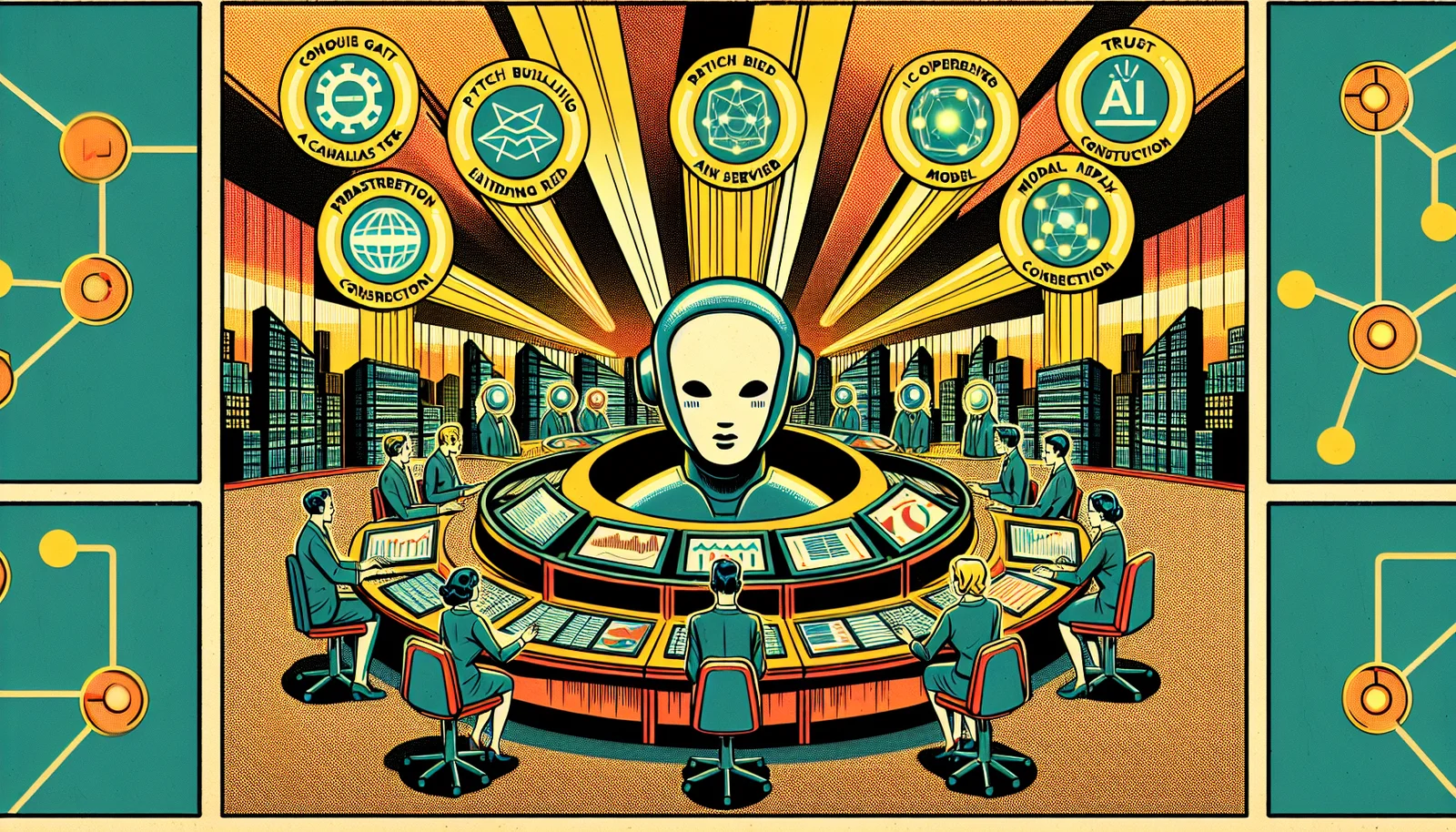
Anthropic Ships Ten Finance Agents and Microsoft 365 Add-Ins to Bring Claude to Wall Street
Anthropic released ten ready-to-run Claude finance agents and full Microsoft 365 add-ins on May 5, 2026 — turning Claude Opus 4.7 into an integrated workflow partner for banking, insurance, and asset management.

Claude Walks Onto the Trading Floor With Ten Specialist Agents
Anthropic announced on May 5, 2026 that Claude has shipped its most ambitious vertical agent push to date — ten ready-to-run financial services agent templates aimed at the daily workflow of investment banks, asset managers, and insurance firms. The new Claude finance agents arrive as both standalone plugins and as components inside Claude Managed Agents, and they are powered by Claude Opus 4.7, the company's most capable financial-reasoning model. On the same day, Anthropic also rolled out full Microsoft 365 add-ins, putting Claude inside Excel, PowerPoint, Word, and Outlook with shared context across all four applications.
The combined release is a meaningful step for enterprise AI in financial services. For the past two years, the dominant pattern for AI in finance has been bring-your-own-prompt — analysts pasting research questions into a chat window and copying the output back into their working documents. The new Claude finance agent templates collapse that loop into integrated workflow primitives. A pitch builder, an earnings reviewer, a model builder, a general ledger reconciler — each is a configured agent designed to handle a recognizable, time-consuming task that finance professionals do every week.
What the Ten Agents Actually Do
The ten Claude finance agents split cleanly into two families. The research-and-coverage cohort is built for the front office: a pitch builder that drafts comps models and pitchbook decks, a meeting preparer that assembles client briefings, an earnings reviewer that ingests transcripts and flags model-relevant updates, a financial model builder that generates structured projections, and a market researcher that synthesizes sector intelligence.
The finance-and-operations cohort handles the back office. A valuation reviewer audits portfolio marks. A general ledger reconciler walks transactional inconsistencies. A month-end closer compresses the close cycle. A statement auditor examines financial statements for anomalies. And a KYC screener assembles entity files and packages compliance escalations. The shared design principle across all ten templates is the same: take a recurring task that consumes meaningful analyst hours, and turn it into an agent that does the heavy lift while the human keeps editorial control.
Claude Opus 4.7 Is Doing the Heavy Lifting
The model behind the new financial services agents is Claude Opus 4.7, which Anthropic positions as the industry leader on the Vals AI Finance Agent benchmark at 64.37%. The benchmark matters because financial workflows historically punish models that hallucinate numerical context — the difference between $1.4 billion and $1.4 million in a pitch deck is not a rounding error. Anthropic's positioning of Claude Opus 4.7 as a finance-grade reasoning model is supported by a launch roster of anchor partners that includes Citadel, FIS, BNY, Carlyle, Mizuho, Travelers, Walleye Capital, and Hg.
The data partner list is just as substantive. Dun & Bradstreet, Fiscal AI, Guidepoint, IBISWorld, and Moody's are providing connectors and MCP-based integrations that give Claude grounded access to the proprietary datasets a working analyst actually needs. That data-grounding is the structural piece that distinguishes a useful finance agent from a confidently-wrong one.
Microsoft 365 Add-Ins Carry Context Across Four Apps
The second half of the announcement is the Microsoft 365 integration story. Claude is now generally available as add-ins inside Excel, PowerPoint, and Word, and Claude for Outlook has launched in beta. The technically interesting design choice is that Claude carries its knowledge and context across all four applications, which means an analyst can build a model in Excel, draft commentary in Word, generate a deck in PowerPoint, and send the client follow-up from Outlook — all with the same Claude instance retaining the context of what was just produced.
For finance teams that live inside Microsoft 365, that cross-application context is the feature that turns Claude from a useful sidebar into a workflow operating layer. Cross-app continuity has historically been the friction point that made AI-assisted analyst work feel disjointed, and the Microsoft 365 add-ins remove most of that friction in one stroke.
The Bigger Picture for Enterprise AI in Finance
The May 5 release is best read as a structural step in the enterprise AI in financial services story. Anthropic has been building toward this kind of vertical play for several quarters — the FIS partnership that brings agentic AI to banking starting with financial crimes detection was announced the same day, and a number of the launch customers have been piloting Claude in production for months. What changed on May 5 is that the platform now ships with ten templates that capture the most common analyst workflows out of the box, and the Microsoft 365 integration is no longer a beta limited to handful of pilot customers.
For working finance professionals, the practical upside is immediate. The earnings reviewer can ingest a transcript, surface the model-relevant changes, and stage a draft model update for human review. The KYC screener can assemble an entity file from disparate sources and package the compliance escalation in a structured format. The pitch builder can generate a first-draft deck that anchors a junior analyst's work rather than starting from a blank slide. None of that is replacing analyst judgment — but all of it is reducing the time-to-first-draft on the most repetitive parts of the job.
A Maturing Vertical AI Platform
The Anthropic financial services agents announcement signals something broader about where enterprise AI is heading. The early generative AI cycle was dominated by horizontal capabilities — chat interfaces, code generation, document summarization. The next phase is vertical specialization — agent templates configured for the specific workflows of banking, insurance, healthcare, and law. Anthropic's May 5 release is one of the cleanest expressions of that vertical pivot we have seen so far, and the launch partner roster suggests the financial services category is going to be one of the most active enterprise AI verticals over the next twelve months.
Sources: Anthropic News — Agents for Financial Services and Insurance (May 5, 2026), Bloomberg Coverage of Anthropic Financial Services Agents (May 5, 2026), Fortune Reporting on Anthropic Wall Street Push and Microsoft 365 Integration (May 5, 2026)
More AI Stories

Gemini Agent for Work: What Google's Universal Agent Does
Google's new Gemini agent runs multi-day jobs in the cloud, routes work across Gemini and Claude models, and adds hard spend caps for business teams.

Liquid AI d1 Models: Open Decision AI That Answers in 8 ms
Liquid AI's open d1-3B and d1-omni-600M decision models skip token generation and answer in one pass, as fast as 8 ms on an RTX 4090 and 50 ms on Jetson.

Claude Haiku 5.5 Pricing: What a 90% Cheaper Haiku Unlocks
Claude Haiku 5.5 launches at $0.10 per million input tokens with a 1M context window, adjustable effort, and a 72.4% OSWorld score, up from 15.7%.