
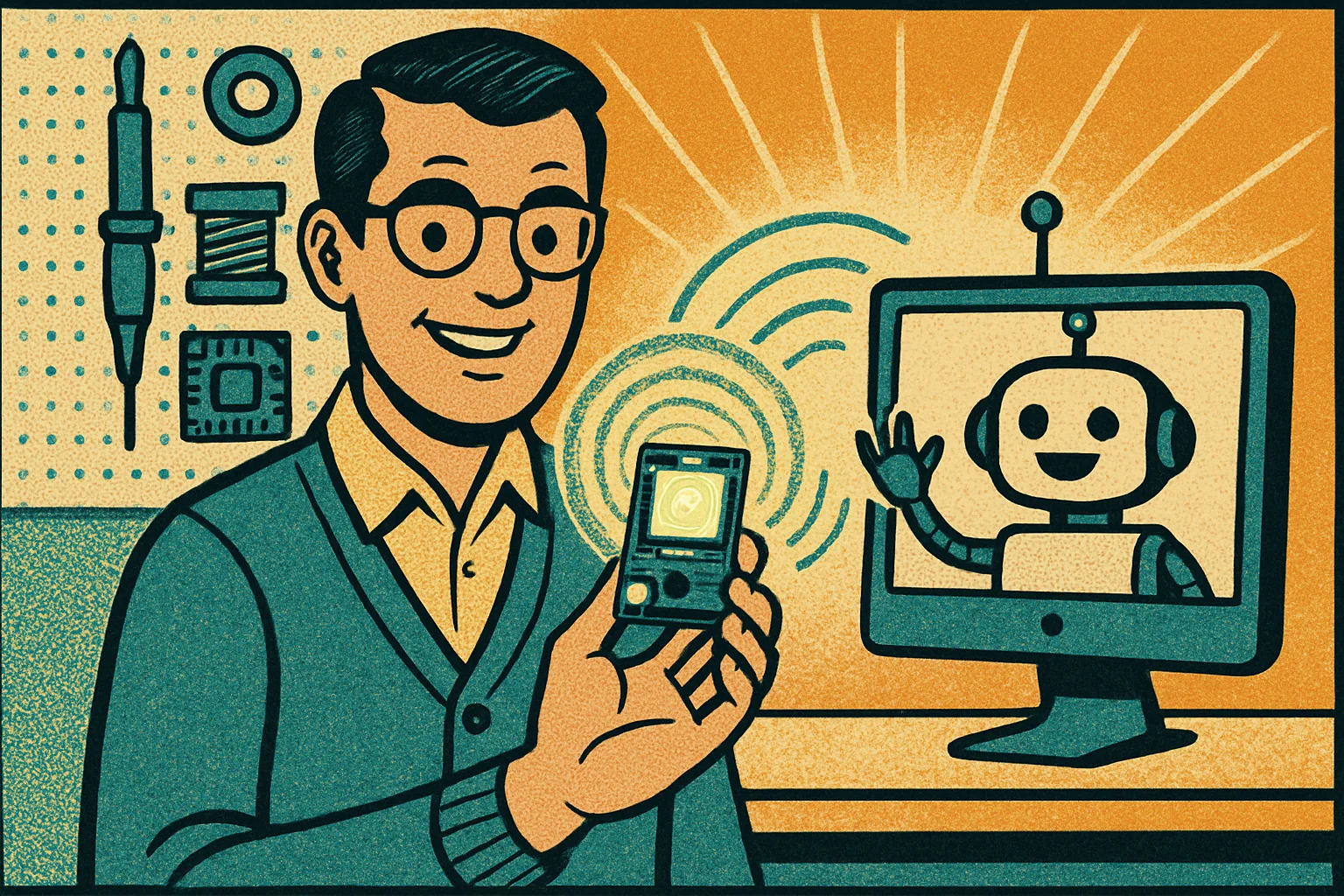
Anthropic Opens Claude's Bluetooth API — Open-Source Desktop Buddy Turns an ESP32 Into a Real AI Desk Pet
Anthropic open-sourced the Claude Desktop Buddy on May 16, 2026 — a Bluetooth Low Energy reference project that turns a $30 ESP32-S3 board into an interactive hardware companion for the Claude desktop app.

Anthropic Just Gave Makers a Real Hardware Bridge Into Claude
On May 16, 2026, Anthropic open-sourced the Claude Desktop Buddy — a complete reference project that uses an ESP32-S3 single-board microcontroller to act as a physical desk companion for the Claude desktop app. The release lands alongside the Bluetooth Low Energy (BLE) API now baked into Claude Cowork and Claude Code Desktop, which means any tinkerer with a soldering iron and an Adafruit shipping account can now build a hardware peripheral that talks directly to Claude. The reference build runs on the M5StickC Plus, an ESP32-S3-based board that retails for about $30 on AliExpress and Amazon — and the whole project lives on GitHub under the anthropics/claude-desktop-buddy repository.
For mini computer hobbyists, ESP32 makers, and anyone who has been waiting for AI assistants to step out of the browser tab and onto the desk, this is the launch that turns a frontier model into something you can actually pick up and squeeze. The Desktop Buddy started as an April Fools' Easter egg hidden inside the Claude Code CLI, accidentally leaked a day early through an npm source map, and has now been promoted into a real, supported maker platform with a full BLE protocol spec.
What the Claude Desktop Buddy Does
The Desktop Buddy is a small ESP32-based device that pairs with the Claude desktop app over Bluetooth Low Energy and gives Claude a physical presence on your desk. The reference firmware runs on the M5StickC Plus and supports a small color LCD, a button input, and animated status indicators. The desk pet wakes up when a Claude session starts, displays the current model and token count, gets visibly impatient when an approval prompt is waiting in Claude Code, and lets you approve or deny that prompt directly from the device's button — no need to alt-tab back to the terminal.
The Hardware Companion Pattern in Practice
The structural pitch is that the AI agent gets a physical avatar in the room with you. Heartbeat snapshots from the Claude desktop app flow over BLE every few seconds, carrying session status, recent tool-use entries, current token counts, and any pending permission prompts. The Desktop Buddy parses that JSON, renders it on the tiny LCD, and pings its buzzer when something needs your attention. It is a deliberately minimal form factor — the goal is presence and ambient awareness, not a second screen.
The Bluetooth Low Energy API Is the Real Story
The Desktop Buddy is the demo. The Bluetooth Low Energy API beneath it is the platform. Anthropic has standardized on the Nordic UART Service over BLE — a widely supported single board computer protocol — and ships newline-delimited JSON messages between the desktop app and any peer device that advertises the right BLE service UUID. That means makers are not locked into the ESP32-S3 reference build. Any BLE-capable single board computer, microcontroller, or smart accessory that can speak Nordic UART can become a Claude hardware peripheral.
Why ESP32 Is the Right Reference Platform
Picking the ESP32-S3 as the reference target was the operationally smart choice. The ESP32 family is the most popular maker microcontroller in the world right now — millions of hobbyists already own a board, the toolchains are well-supported on Arduino IDE and PlatformIO, and the BLE stack is mature. The M5StickC Plus specifically bundles the ESP32-S3 with a color LCD, a button, an IMU, a buzzer, and a battery in a finished enclosure for $30. That removes the breadboarding step entirely. A maker can flash the firmware, pair the device, and have a working Desktop Buddy on the desk in under fifteen minutes.
How the Protocol Works for Custom Hardware Projects
The Nordic UART Service over BLE sends newline-delimited JSON messages from the Claude desktop app to any paired device. Each heartbeat snapshot includes the current Claude session ID, the active model, the latest tool-use entries, the running token count, and any pending permission prompt that needs user approval. Sending a JSON message back from the device — confirming or denying a prompt, for example — triggers the corresponding action in the Claude session. That bidirectional flow is the architectural primitive that custom hardware builders can compose into much richer peripherals than the reference Desktop Buddy.
What Makers Will Build Next
The reference Desktop Buddy is intentionally simple, but the API surface is enough to support a much wider range of projects. A maker could build a Raspberry Pi-based status panel that visualizes Claude token usage across an entire team. A wearable Pi Pico project could buzz on the wrist when a long-running Claude Code job needs approval. A cyberdeck handheld could host a full Claude session display alongside its existing controls. The protocol is permissive enough that the community is likely to produce a wide range of unofficial hardware companions over the coming weeks.
The Open Source License Makes This a Community Platform
The Desktop Buddy GitHub repository ships with a permissive open-source license — meaning makers can fork the firmware, port it to other ESP32 boards, adapt it for different display sizes, or build custom enclosures without licensing friction. The combination of open hardware reference, open firmware, and open protocol is the structural choice that turns the Desktop Buddy from a single official product into the foundation for a maker ecosystem. Anthropic is positioning Claude as a hardware-friendly AI platform rather than a closed app experience.
The Ecosystem Comparison Worth Noting
The closest analogue to what Anthropic is doing here is what Apple did with HomeKit Accessory Development Kit or what Philips did with the Hue API. Each of those moves converted a closed product into a developer platform that third parties could extend with custom hardware. The Claude Desktop Buddy release follows the same pattern — and given how active the ESP32 and Raspberry Pi maker communities are, the resulting ecosystem could move fast.
The Setup for the Next Wave of AI Hardware Companions
For ESP32 makers, single-board computer hobbyists, and the broader DIY AI hardware community, the Claude Desktop Buddy release is the kind of structural announcement that opens up a new category of personal AI peripherals. The Bluetooth Low Energy API gives makers a clean, well-documented interface. The M5StickC Plus reference platform demonstrates what a finished product looks like. The Nordic UART protocol choice ensures broad SBC compatibility. The permissive open source license removes licensing friction. The next watch items are the community-built variants that emerge on the Hackaday and Reddit r/raspberry_pi feeds, the eventual port to other SBC platforms beyond ESP32, and whether other frontier model providers follow Anthropic with their own hardware companion APIs. For makers who have been waiting for a real hardware on-ramp into modern AI assistants, the Desktop Buddy is the project to clone first.
Sources: CNX Software, "Anthropic's open-source Claude Desktop Buddy turns ESP32-S3 devices into interactive AI desk companions," May 16, 2026; Espressif Systems press release, May 2026; Anthropic GitHub claude-desktop-buddy repository, May 2026; Circuitrocks ESP32 Claude Bluetooth coverage, May 2026; Phemex Anthropic BLE API coverage, May 2026.
More Mini Computers Stories

Raspberry Pi Net Zero: How Pi Towers Swapped Gas for Pis
Raspberry Pi replaced a £150,000 building system with a £7,800 Pi-based one at Pi Towers, cut gas entirely in June 2026, and targets net zero in 2027.

Q8botOne Robot Dog: A Palm-Sized Open ESP32-C3 Quadruped
Q8botOne is a palm-sized open-source robot dog with an ESP32-C3 brain and 8 DYNAMIXEL actuators, from $199 as a kit or $599 assembled on Crowd Supply.
Surface RTX Spark Dev Box: Is a $5,999 AI Box Worth It?
Microsoft opened Surface RTX Spark Dev Box pre-orders at $5,999: 128GB unified memory, up to 1 petaflop FP4, and support for 120B-plus parameter models.