
Anthropic Wires Claude Into Adobe, Blender, and Ableton With Nine Creative Connectors
Anthropic released nine Claude AI connectors on April 28, 2026 — wiring the assistant directly into Adobe Creative Cloud, Blender, Ableton Live, Autodesk Fusion, and more for natural-language creative workflows.

A Move From Adjacent Helper to In-App Agent
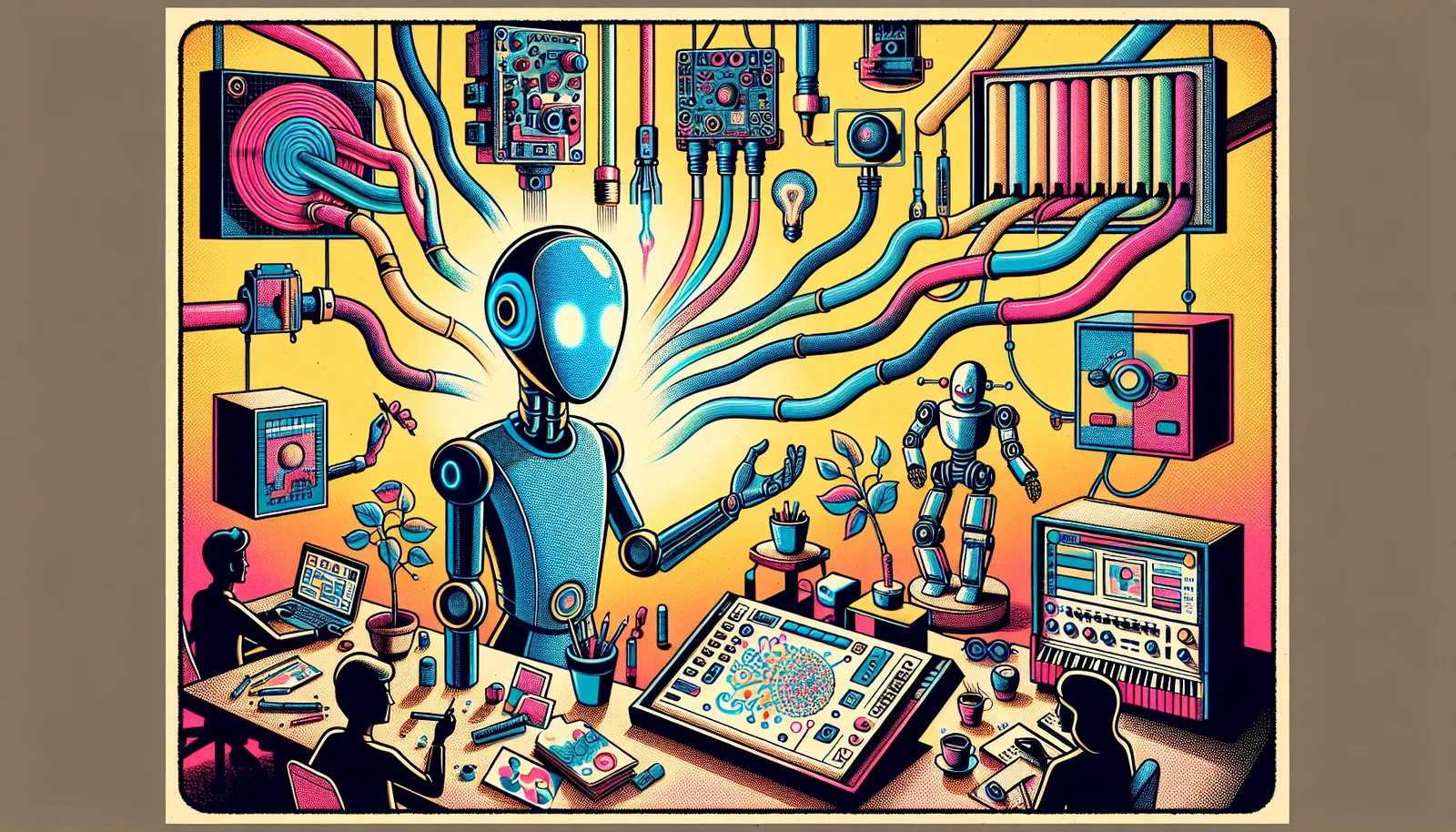
Anthropic announced on April 28, 2026 that Claude can now operate directly inside nine of the most heavily used creative software packages in the industry. The new Claude creative connectors plug the AI assistant into Adobe Creative Cloud, Blender, Ableton Live, Autodesk Fusion, Splice, SketchUp, Affinity by Canva, and Resolume's Arena and Wire — turning Claude from a separate browser tab into an agent that can reach inside the creative tool a designer, animator, or musician already has open.
The shift is structurally important for AI-assisted creative work. For most of the past two years, AI assistance for creative production has lived in a parallel window: the artist describes a problem, the model generates suggestions, and the artist manually carries the result back into their primary tool. The Claude creative connectors collapse that loop. The model now reads the open project and can initiate operations against the host tool's own API, which means Claude can answer "how do I rig this character" by actually exploring the rig in Blender rather than gesturing toward documentation.
What Each Connector Actually Does
The nine integrations are tailored to the strengths of each host application. Inside Adobe Creative Cloud, Claude can draw from over fifty tools spanning Photoshop, Premiere, Express, and the rest of the suite, helping creators bring images, videos, and designs to life through conversational prompts. The Blender connector is built around Blender's Python API — Claude becomes a natural-language interface to that scripting layer, which turns every complex node graph or geometry node setup into something a user can interrogate and refine in plain English.
For musicians, the Ableton Live connector grounds Claude's responses in the official Live and Push documentation, which is a meaningful safeguard against the kind of confidently-wrong workflow advice that has historically been a problem when generic LLMs talk about specialized music software. The Autodesk Fusion integration goes the other direction toward direct manipulation: subscribers can create and modify 3D models through a conversation with Claude, which lowers the barrier to professional CAD work for designers without a deep parametric modeling background.
A Plug-In Pattern Built on the Model Context Protocol
Under the hood, the Claude creative connectors lean on the Model Context Protocol, the open standard Anthropic introduced for AI applications to talk to external tools. Using MCP for the creative tool integrations is the right architectural choice — it keeps the same authoring surface Claude uses for code editors, productivity tools, and enterprise data sources, which means the connector pattern can scale to whatever creative tool joins the ecosystem next without bespoke integration work.
For working creatives, the practical upside is immediate. A music producer can ask Claude how to set up a sidechain compression workflow in Live and have the model both explain the concept and ground its answer in the actual Live documentation. A 3D artist can describe a character pose in plain English and have Claude reach into Blender's API to set the relevant constraints. An industrial designer can iterate on a Fusion sketch through conversational refinement rather than scrolling through dropdown menus.
Education Is Part of the Rollout
Alongside the connectors, Anthropic announced creative-program partnerships with the Art and Computation initiative at Rhode Island School of Design, the Fundamentals of AI for Creatives program at Ringling College of Art and Design, and the MA/MFA Computational Arts program at Goldsmiths, University of London. The education angle matters because creative software literacy has a steep learning curve, and the partnership cohort gives the next generation of artists structured access to AI-assisted creative workflows during their formal training.
Why the Creative-Tool Surface Matters for AI
The creative tool ecosystem has historically been one of the harder surfaces for AI assistants to reach effectively. Each application has its own scripting model, file format, and conceptual vocabulary, and a model that knows everything about Python or JavaScript can still flounder in Ableton Live's signal-flow conventions or Blender's geometry-node graph. By shipping connectors that hand Claude both the official documentation and the in-app API, Anthropic has built a much more grounded foundation for AI-assisted creative work than the "describe what you want and we'll generate from scratch" pattern that dominated the early generative AI cycle.
For the broader creative software industry, the move signals a meaningful next chapter. AI is moving from the marketing layer of creative tools — generative fills, smart selects, AI-assisted color grading — into the orchestration layer, where a single conversational interface can sequence operations across an entire toolchain. That is the kind of shift that changes how studios train junior creatives, how solo artists scale their output, and how professional creative work gets done across image, video, music, and 3D.
Sources: Anthropic Claude for Creative Work Announcement (April 28, 2026), 9to5Mac Coverage of Claude Creative Connectors (April 28, 2026), MacRumors Reporting on Adobe Blender SketchUp Integrations (April 28, 2026)
More AI Stories

Gemini Agent for Work: What Google's Universal Agent Does
Google's new Gemini agent runs multi-day jobs in the cloud, routes work across Gemini and Claude models, and adds hard spend caps for business teams.

Liquid AI d1 Models: Open Decision AI That Answers in 8 ms
Liquid AI's open d1-3B and d1-omni-600M decision models skip token generation and answer in one pass, as fast as 8 ms on an RTX 4090 and 50 ms on Jetson.

Claude Haiku 5.5 Pricing: What a 90% Cheaper Haiku Unlocks
Claude Haiku 5.5 launches at $0.10 per million input tokens with a 1M context window, adjustable effort, and a 72.4% OSWorld score, up from 15.7%.